


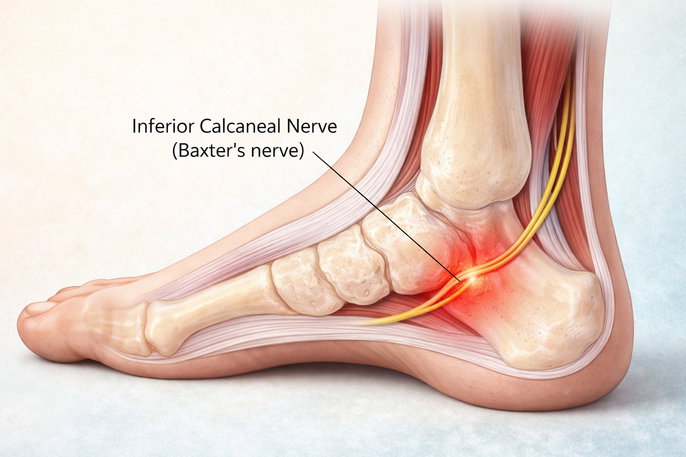
Baxter’s nerve entrapment is a condition that occurs when a small nerve in the heel, known as the inferior calcaneal nerve, becomes compressed or irritated. This nerve runs along the inner side of the heel and helps control certain foot muscles, so pressure on it can lead to persistent heel pain.
This condition is commonly linked to chronic heel pain and is often mistaken for plantar fasciitis, since both affect the same area. However, baxter's nerve entrapment typically causes a more constant or burning type of pain, especially during activity or after standing for long periods.
Treatment focuses on relieving pressure on the nerve through rest, physical therapy, or supportive footwear, and in some cases injections or surgery may be needed. Identifying the symptoms early and getting a proper evaluation can help reduce long-term discomfort and support recovery.
Main symptoms
Baxter’s nerve entrapment can cause ongoing heel pain that may gradually worsen over time if not treated. While it shares similarities with other heel conditions, some symptoms are more specific.
-
Pain on the inner side of the heel
-
Burning or tingling sensation in the heel or foot
-
Pain that worsens with walking, running, or standing for long periods
-
Discomfort that does not improve with rest alone
-
Weakness in foot muscles in more advanced cases
These symptoms may be constant or slowly increase, especially with repeated stress on the foot.
Common causes
Baxter’s nerve entrapment usually develops when the nerve is compressed as it passes through tight spaces in the foot. This compression can happen due to mechanical stress, repetitive strain, or other related conditions.
1. Mechanical stress and foot structure
Foot structure plays an important role in how pressure is distributed across the heel. Flat feet or overpronation can increase strain on the inner side of the heel, while high arches may place excess pressure on the same area. Abnormal foot alignment or walking patterns can also contribute to ongoing stress that affects the nerve.
2. Repetitive strain
Repeated stress on the heel is another common factor. Spending long periods standing or walking, as well as participating in high-impact activities like running, can place continuous pressure on the nerve. Over time, this repeated strain can lead to irritation and pain.
3. Associated conditions
Certain conditions can further reduce the space around the nerve and increase the risk of compression. Chronic plantar fasciitis may cause thickening of nearby tissues, while heel spurs or changes in the fascia can also contribute. In some cases, muscle enlargement or swelling near the nerve can add to the pressure in this area.
Confirming a diagnosis
Diagnosis of Baxter's nerve entrapment is based on a clinical evaluation along with imaging tests. A healthcare provider will review symptoms and perform a physical exam, focusing on the location and type of heel pain.
Imaging tests such as ultrasound or MRI may be used to detect signs of nerve compression or related changes, including muscle atrophy. These tests also help rule out other possible causes of heel pain.
In some cases, a diagnostic nerve block may be performed. If the pain improves after the injection, it supports the diagnosis by confirming that the nerve is the source of the symptoms.
Treatment options
Initial treatment for Baxter's nerve entrapment focuses on reducing pressure on the nerve and improving how the foot functions. This may include rest and changes in daily activities to limit strain on the heel, along with stretching exercises for the foot and calf. Supportive footwear or orthotics can help correct foot alignment, and anti-inflammatory medications may be used to reduce pain and swelling.
Corticosteroid injections or ultrasound-guided nerve blocks may be used when symptoms persist. These treatments help reduce inflammation around the nerve and can provide pain relief. They may also help confirm the diagnosis if symptoms improve after the procedure.
Physical therapy can play an important role in recovery. Treatment may include strengthening exercises, manual therapy techniques, and strategies to improve foot mechanics. These approaches help reduce strain on the nerve and support better movement patterns.
Surgery may be considered if symptoms do not improve with conservative care. The procedure typically involves releasing the structures that are compressing the nerve, which can help restore normal function and relieve pain.
Prevention measures
Preventing baxter's nerve entrapment involves reducing stress on the heel and maintaining proper foot mechanics. Wearing supportive, well-fitting shoes can help distribute pressure more evenly, while orthotics may be used when needed to improve alignment.
Avoiding excessive repetitive strain on the heel and regularly stretching the calf and foot muscles can also help lower the risk of developing chronic heel pain related to nerve compression