


Atopic dermatitis treatment may involve medications in the form of ointments, pills, or injections. These are prescribed by a doctor based on the severity of symptoms, such as itching, redness, swelling, or peeling skin.
Atopic dermatitis can occur due to a genetic change that affects the skin’s protective barrier. This can increase the risk of inflammation, dryness, and even skin infections, and it can affect adults, children, and babies.
Treatment for atopic dermatitis should be guided by a general practitioner or dermatologist. For babies with atopic dermatitis, a pediatrician should be consulted to determine the best treatment, as not all medications are safe for children.
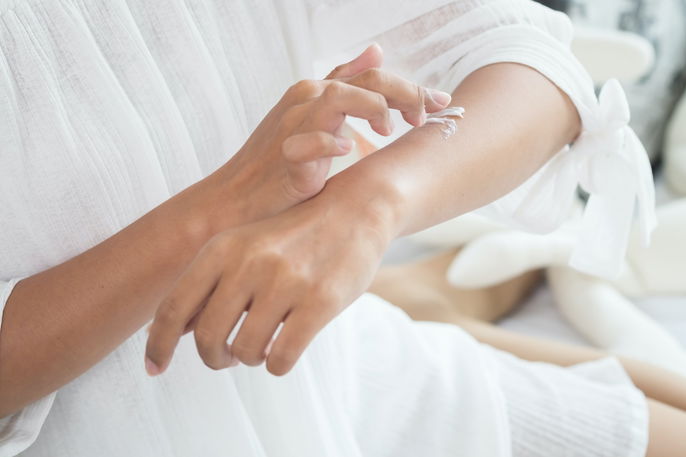
Medical treatments for atopic dermatitis
The main treatment options for atopic dermatitis are:
1. Moisturizers
Moisturizers are recommended for atopic dermatitis because they help keep the skin hydrated and calm. They can reduce symptoms such as itching, irritation, redness, and dryness, and may also help prevent new atopic dermatitis flare-ups.
The most recommended moisturizers for atopic dermatitis are fragrance-free, neutral products that contain a higher amount of oils. They should be applied right after bathing, while the skin is still damp.
Some examples of moisturizers for atopic dermatitis that may be recommended by a doctor include Vanicream Moisturizing Cream, CeraVe Moisturizing Cream, Cetaphil Moisturizing Cream, or Eucerin Advanced Repair Cream.
2. Medications
The medications most commonly recommended for atopic dermatitis treatment are:
-
Corticosteroids: creams and ointments, such as betamethasone or triamcinolone, are usually the first treatment options. However, in more severe cases, oral corticosteroids may also be recommended;
-
Immunosuppressants: these are alternatives to corticosteroids and include ointments such as pimecrolimus or tacrolimus. In more severe cases, oral medications such as cyclosporine, azathioprine, or methotrexate may also be necessary;
-
Antihistamines: these medications, such as diphenhydramine or hydroxyzine, may sometimes be recommended for intense skin itching;
-
Biologic agents: these include medications such as dupilumab, which is available as an injection and is usually recommended when other treatments have not worked;
-
Antibiotics: these are generally recommended when infection of the skin lesions is suspected, especially when sores develop from frequent scratching.
The first medications used for atopic dermatitis are usually corticosteroid or immunosuppressant creams and ointments. Other treatments are usually recommended when these initial measures are not enough to relieve symptoms.
In addition, because of the risk of side effects, such as skin thinning and changes in superficial blood vessels, it is important to consult a dermatologist before using any medication.
Medications should be used exactly as prescribed by a doctor to help prevent the condition from getting worse or returning during treatment.
3. Phototherapy
Phototherapy with narrowband ultraviolet B radiation may be recommended by a doctor for moderate to severe atopic dermatitis that has not improved with other treatments.
This treatment helps reduce skin inflammation and has fewer side effects than some other treatments.
Atopic dermatitis treatment with phototherapy is usually done in 3 to 5 sessions per week and takes around 4 to 8 weeks.
Care during treatment
Some recommended precautions during atopic dermatitis treatment include:
-
Avoid taking very hot or long baths;
-
Dry the skin with a soft towel;
-
Use moisturizer every day;
-
Avoid applying perfume or scented lotions to the skin;
-
Avoid contact with substances that can trigger or worsen symptoms, such as pollen or pool water;
-
Wear cotton clothing and avoid synthetic fabrics;
-
Increase intake of anti-inflammatory foods, such as chia seeds, for example;
-
Avoid very hot environments that promote sweating.
It is important to continue these precautions even when atopic dermatitis symptoms go away. This helps prevent the skin from becoming too dry and the lesions from returning.