


- Arthroscopy is a minimally invasive procedure used to diagnose or treat joint problems.
- It may be used for ligament tears, cartilage injuries, and rotator cuff problems.
- Recovery is usually faster than with traditional surgery, and most people go home the same day.
Arthroscopy is a minimally invasive surgery used to diagnose or treat problems in joints such as the knee, shoulder, elbow, ankle, or hip.
It allows the doctor to view and repair structures inside the joint using a thin tube with a camera on the tip, which is inserted through small cuts in the skin.
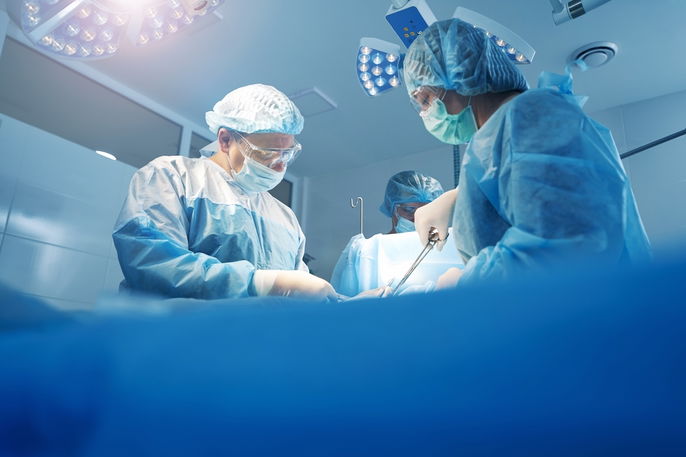
Arthroscopy is performed by an orthopedic surgeon in a hospital using epidural, general, or local anesthesia with sedation. It is usually done in private hospitals, ambulatory surgery centers, or hospital-based outpatient departments and is covered by public or private health insurance.
Indications for surgery
Arthroscopy may be used to diagnose or treat:
-
Meniscus or ligament injuries in the knee
-
Synovitis or tendinitis in the knee, shoulder, wrist, or elbow
-
Rotator cuff injury in the shoulder or recurrent dislocation
-
Chondromalacia or an anterior cruciate ligament (ACL) tear in the knee
-
Carpal tunnel syndrome in the wrist
-
Cartilage injuries in the hip or ligament injuries in the ankle
-
Loose fragments of bone and/or cartilage in the knees, shoulders, elbows, ankles, or wrist
-
Problems in the temporomandibular joint (TMJ)
In addition, arthroscopy may be indicated for joint problems caused by rheumatoid arthritis or to perform a joint biopsy.
Arthroscopy is usually done when tests such as X-rays, CT scans, or MRI have not been enough to diagnose joint problems.
Knee arthroscopy
Knee arthroscopy may be recommended by an orthopedic surgeon when there is a torn ligament, such as the ACL, the medial or lateral collateral ligament, or the posterior cruciate ligament, which can leave the knee unstable.
This type of injury is more common in athletes who play sports such as soccer, basketball, or tennis because of sudden stress on the knee joint.
Preparing for surgery
Some important precautions before surgery include:
-
Informing your surgeon if you take blood thinners (anticoagulants), as they may advise you to stop them several days before arthroscopy to reduce the risk of bleeding
-
Letting your surgeon know about all prescription and over-the-counter medicines, vitamins, and dietary supplements you use
-
Telling your surgeon about any allergies or other medical conditions you have
In addition, not eating or drinking for about 8 hours before surgery may be recommended, since, according to the American Society of Anesthesiologists, fasting before procedures that use anesthesia or sedation helps reduce the risk of pulmonary aspiration.
Before arthroscopy, the doctor will request preoperative tests and blood tests to assess your overall health.
Procedure technique
According to the American Academy of Orthopaedic Surgeons, arthroscopy uses a small camera called an arthroscope that is inserted through small incisions so the surgeon can view the joint on a monitor and guide surgical instruments during the procedure.
To perform arthroscopy, the orthopedic surgeon generally follows these steps:
-
Administers general, epidural, or local anesthesia with sedation
-
Cleans and disinfects the skin over the joint
-
Makes a small incision in the skin
-
Inserts the arthroscope, which is a thin tube with a camera on the tip
-
Views the joint structures, which are shown on a computer screen
-
Repairs the joint if needed by making other small cuts in the skin to insert surgical instruments
-
Closes the incisions with stitches and place a dressing over the area
Arthroscopy is performed by an orthopedic surgeon in a hospital using general, epidural, or local anesthesia with sedation, depending on the joint being evaluated or treated.
The procedure usually lasts about 1 hour, and a hospital stay is generally not needed, so the person can usually go home the same day.
Recovery time
Recovery from arthroscopy is usually much faster than recovery from traditional surgery.
However, recovery time can vary from person to person depending on healing speed and the problem treated.
Postop instructions
Some precautions are important to help speed recovery, such as:
-
Taking all prescribed medications at the correct times
-
Applying an ice pack to the area several times a day for 3 days to help reduce swelling and pain
-
Resting and avoiding putting weight on the affected area for at least 4 days
-
Keeping the limb raised above heart level for 2 to 3 days to reduce swelling, especially after knee, elbow, or wrist arthroscopy
-
Using braces or crutches during recovery, as recommended by the doctor
In addition, rehabilitation physical therapy sessions may be recommended, especially when a structure inside the joint has been repaired.
Physical therapy
Physical therapy helps fully restore muscle strength and improve movement in the treated limb, which may be affected after surgery.
Physical activity can usually be resumed about 6 weeks after arthroscopy, according to the orthopedic surgeon’s recommendations.
In some cases, it may also be important to switch from high-impact activities depending on the type of injury treated.
Potential risks
The risk of complications from arthroscopic surgery is very low. However, as with any surgery, bleeding, infection at the incision site, or an allergic reaction to anesthesia can occur.
In addition, joint stiffness or injury to healthy structures inside the joint may also occur.