


Anasarca is severe, widespread swelling caused by excess fluid buildup throughout the body. It can affect multiple areas at the same time, including the legs, arms, face, abdomen, and lungs.
This condition is usually a sign of an underlying medical problem rather than a disease on its own. Common causes include heart failure, kidney disease, liver disease, and problems involving fluid balance or the lymphatic system.
Treatment focuses on the condition causing the swelling and often includes medicines that help the body remove extra fluid, along with salt restriction and other supportive measures. In severe cases, urgent medical care or hospital treatment may be needed.
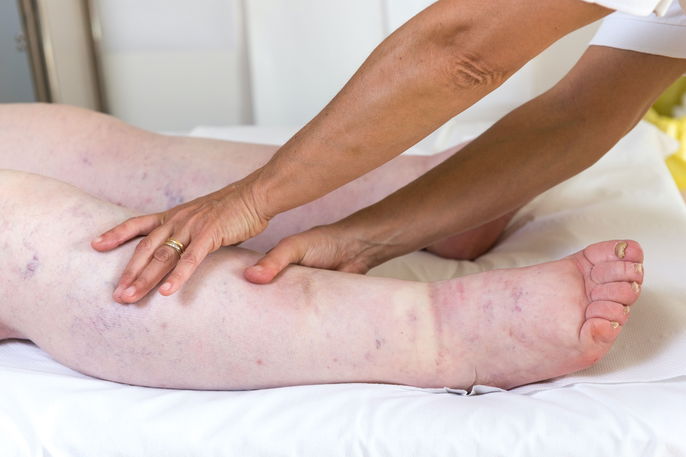
Main symptoms
The main symptoms of anasarca are:
-
Generalized swelling throughout the body
-
Rapid weight gain
-
Tight or shiny skin
-
Increased heart rate
-
Decreased urine output
-
Abdominal swelling, called ascites
In addition, severe anasarca can make it hard to open the eyes due to facial swelling and can also make it difficult to walk, move, or lift the arms.
In more severe cases, the person may also have chest pain and shortness of breath, symptoms that can be related to pulmonary edema (fluid in the lungs) and require immediate medical attention.
The National Heart, Lung, and Blood Institute notes that severe shortness of breath and chest pain are warning signs that may be life-threatening and need urgent evaluation, and pulmonary edema itself can quickly become life-threatening without prompt treatment.
Confirming a diagnosis
The diagnosis of anasarca is usually made by a primary care provider, nephrologist, or cardiologist during a physical exam, which includes checking for pitting edema. In this test, pressure is applied to the skin to see if a lasting indentation remains; a persistent dent supports the presence of edema.
The doctor also examines the skin over the swollen areas, checks for enlarged veins, and notes whether the swelling changes with body position or with medications. This clinical assessment helps narrow down the possible causes and determine which tests are needed next.
Doctors may also order blood and imaging tests to look for the cause, such as kidney and liver function tests, albumin and electrolyte levels, urine tests, an echocardiogram, an abdominal ultrasound, or X‑rays.
Based on guidance from the National Institute of Diabetes and Digestive and Kidney Diseases, blood and urine testing are key parts of evaluating kidney function and can help identify an underlying cause of generalized edema.
Possible causes
The main causes of anasarca are:
-
Heart failure or hepatic venous congestion.
-
Kidney failure or nephrotic syndrome.
-
Cirrhosis or malignant ascites.
-
Deep vein thrombosis (DVT), venous obstruction, or systemic capillary leak.
-
Severe infections, trauma, and burns.
-
Severe malnutrition or vitamin B1 deficiency.
-
Side effects of certain medicines, such as amlodipine or docetaxel.
Anasarca can also be caused by tumors and paraneoplastic syndromes, such as lymphoma or leukemia, as well as severe allergic reactions, such as anaphylaxis.
Can anasarca be fatal?
Anasarca can be serious, but it is usually not the direct cause of death. However, it may signal a serious underlying condition, such as heart, kidney, or liver failure, which can lead to life-threatening complications if not treated.
Treatment options
Treatment for anasarca should be guided by a healthcare provider, according to the underlying cause of the swelling. In general, a provider may recommend the following:
-
Diuretics, such as furosemide, to help remove excess fluid.
-
Supportive measures, such as elevating the legs, compression stockings, or pneumatic devices to improve circulation.
-
Skin care, including the use of moisturizers, since edema can cause skin injury or ulcers.
-
Reduced salt intake in the diet.
Depending on the cause, the provider may also prescribe anticoagulants, blood pressure medicines, or antibiotics, and may adjust intravenous (IV) fluids by reducing the amount given or correcting any electrolyte imbalance.
In severe cases, especially in high-risk situations such as respiratory failure or pulmonary edema, hospital admission may be necessary.