


Achilles tendon pain can be caused by tendinitis, bursitis, tendinosis, or an achilles tendon rupture, and is often associated with repetitive movements or overuse of the tendon.
In addition to heel pain, other symptoms may occur, such as stiffness, difficulty walking, swelling, and, in some cases, a lump along the tendon.
When achilles tendon pain develops, it is important to consult an orthopedic doctor for proper diagnosis and treatment. Treatment may involve rest, anti-inflammatory medication, physical therapy, and, in some cases, surgery.
Main causes
The most common causes of achilles tendon pain include:
1. Tendinitis
The leading cause of achilles tendon pain is tendinitis, also called achilles tendinopathy. This condition is an inflammation of the tendon that causes pain, burning, or stiffness in the heel, which worsens with physical activity and may appear more prominently in the morning. Read more about tendinitis symptoms and how they can present.
Achilles tendinitis is especially common in professional athletes due to repetitive stress but can also affect people who run, play soccer, or engage in other physical activities. It may also develop as a result of tight calf muscles, particularly in people who play sports.
2. Achilles tendon rupture
An achilles tendon rupture is a complete or partial tear of the tendon fibers. It often produces a popping sound at the moment of rupture, followed by intense pain in the heel or back of the leg, along with difficulty walking or moving the affected foot.
This injury usually results from repetitive movements or excessive strain on the feet or ankles. It is more common in athletes who run, play tennis, or soccer, since these sports involve quick changes in speed or direction. It may also happen due to achilles tendinopathy, tripping, falling, or the use of fluoroquinolone antibiotics.
3. Retrocalcaneal bursitis
Retrocalcaneal bursitis is inflammation of the bursa, a small sac that cushions the area between the heel bone and the achilles tendon. It can cause severe tendon pain, swelling, redness, and a burning sensation.
This condition is often the result of overuse or repetitive ankle movements. It is more common in athletes but may also occur in people with gout or rheumatoid arthritis.
4. Achilles tendinosis
Achilles tendinosis is characterized by progressive degeneration or wear of the tendon without inflammation. It causes chronic, worsening pain behind the ankle, often accompanied by swelling.
The exact cause is unclear, but it appears to be linked to tendon overuse, reduced blood flow, and a decline in tensile strength that naturally occurs with aging. It may also result from muscle imbalances, weakness, or overpronation, which happens when the foot tilts inward while walking.
5. Achilles paratenonitis
Achilles paratenonitis is inflammation of the sheath surrounding the achilles tendon. It is generally caused by poorly fitting shoes or repetitive movements and is most common in marathon runners.
Symptoms include pain that worsens during physical activity, as well as swelling and tenderness in the area.
Confirming a diagnosis
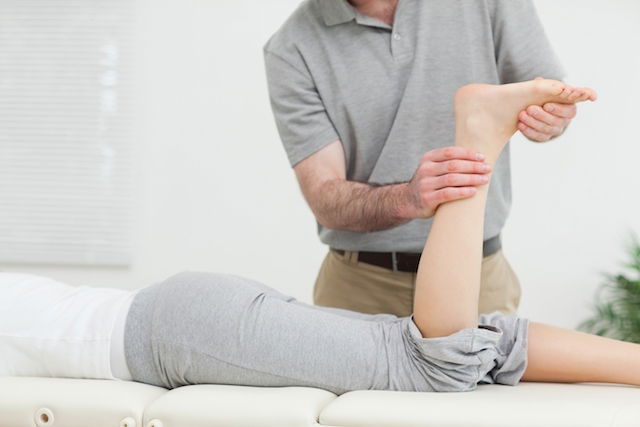
Diagnosis of achilles tendon pain is performed by an orthopedic doctor through a review of symptoms and a physical exam, which involves moving the foot to assess the intensity of the pain.
Imaging tests, such as X-rays or ultrasound, may also be requested to confirm the diagnosis.
Treatment measures
Treatment for achilles tendon pain depends on the cause and typically involves:
-
Rest: avoid overexertion, though complete bed rest is not necessary. Pause physical activity for the length of time recommended by the doctor.
-
Ice packs: apply crushed ice wrapped in a thin cloth or towel around the ankle for 15 to 20 minutes, several times a day. Always protect the skin to prevent ice burns.
-
Anti-inflammatory medication: ibuprofen or naproxen may be prescribed by the doctor to help reduce pain, inflammation, and swelling.
-
Proper footwear: wear comfortable sneakers or shoes. Avoid stiff shoes and high heels. Wedge sandals can be used if the heel is no higher than 1 inch, but other types of heeled shoes are not recommended.
-
Physical therapy: stretching exercises, ultrasound therapy, or shockwave therapy may be recommended to decrease pain and inflammation.
In some cases, surgery may be necessary to repair the achilles tendon.
Physical therapy for achilles tendon pain
Physical therapy may include electrotherapy techniques such as ultrasound, TENS, laser, infrared, and galvanic stimulation to reduce pain and inflammation.
Calf stretches, local massage, and eccentric strengthening exercises (performed with the leg both straight and bent) are also very effective for recovery.
Stretching exercises
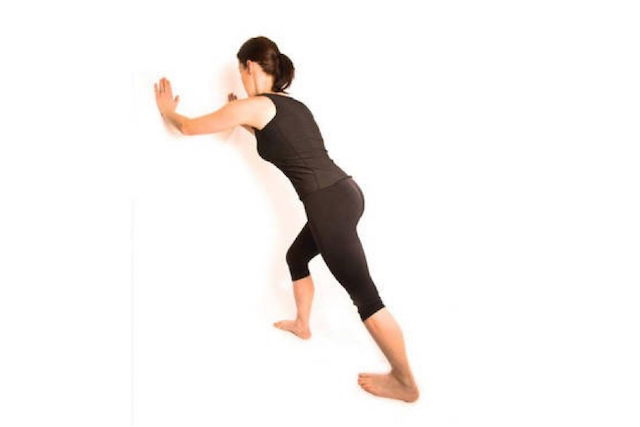
To stretch the calf muscles, the physical therapist may recommend the following:
-
Stand on a step with the front part of the foot placed on the edge.
-
Shift your weight forward and lower the heel as much as possible.
-
Hold this position for 30 seconds to 1 minute.
-
Repeat with the other leg. Perform 3 stretches per leg, twice daily, for 1 week.
Strengthening exercises
After the stretching phase, strengthening exercises may be introduced using the same step:

-
Place the front part of both feet on the step.
-
Raise the heels as high as possible.
-
Perform 3 sets of 10 repetitions.
Other strengthening exercises may be recommended by the physical therapist, depending on individual needs.