


Threading is an effective hair removal technique that can be used on different areas of the body, such as the face or bikini line. Unlike waxing or shaving, it usually does not leave the skin irritated, sore, or red, and it may also help slow hair regrowth.
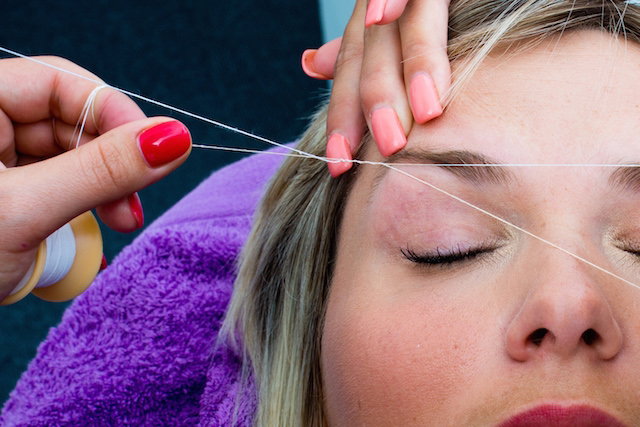
Although threading can be used on many parts of the body, it is most often used on delicate areas such as the eyebrows, upper lip, and fine facial hair. The technique uses a thin 100% cotton thread that is twisted into a figure-eight shape and moved across the skin to pull out the hairs.
This hair removal method can be done at home and is generally practical and low-cost. It only requires sewing thread, powder (such as cornstarch), moisturizer, and a mirror.
Main benefits
The main benefits of threading are:
-
It can be used on all skin types, including sensitive skin.
-
It is a very hygienic technique.
-
It does not cause sagging in the treated area.
-
It does not leave the skin stained, swollen, or red for very long, usually no more than 15 minutes.
-
The technique can be used even when the hair is very short or very fine.
-
It helps delay hair regrowth, making the hair progressively weaker.
According to the FDA, some cosmetic ingredients can cause skin irritation or allergic reactions in certain individuals. Because threading does not rely on chemical hair removal products, it may help avoid some forms of product-related irritation.
Step-by-step instructions
The step-by-step process for threading is as follows:
-
Prepare the thread.
-
Apply a small amount of powder, such as cornstarch, to the skin to absorb excess oil, help the thread move more easily, and make the hairs easier to see.
-
Hold the skin taut to help remove hair more easily and minimize discomfort.
-
Place the twisted part of the thread over the area where you want to remove hair.
-
Open and close the fingers, as if using scissors. Keep in mind that the hair must stay inside the larger opening of the thread so it can be removed. This step takes the most time and should be repeated until all the hair in the desired area has been removed.
-
Apply a moisturizing cream with soothing properties to the area after hair removal.
Threading is best done by a trained professional, although it can also be done at home. Latex gloves may also be used to help prevent injury to the skin during the process.
The areas of the body that can be treated with threading include the face, such as the eyebrows, upper lip, sides of the face, and beard, as well as the underarms, legs, and bikini area.
According to the American Academy of Dermatology, a board-certified dermatologist can recommend the hair removal option that is right for you when hair removal is causing skin problems or when expert guidance is needed.
Preparing the thread
Before threading, it is important to prepare the thread correctly so the technique can be done properly:
-
Measure the thread from the wrist to the shoulder and cut it, with the length usually ranging from 20 to 40 cm.
-
Tie the ends of the thread together with 2 or 3 knots so it stays firm.
-
Form a rectangle with the thread by placing three fingers on each side.
-
Twist the thread by crossing it in the middle about 5 times to form a figure-eight.
The thread should always be made of cotton or polyester to help prevent skin injury and should preferably be white so the hair can be seen more easily.