


Signs of Down syndrome during pregnancy can be assessed with specific prenatal tests, such as nuchal translucency, cordocentesis, and amniocentesis. Not all pregnant people need these tests, but they are usually recommended by the OB-GYN when the mother is over 35.
These tests may also be recommended if there has been a previous pregnancy with Down syndrome. They may also be requested if the OB-GYN sees changes on an ultrasound that raise concern for the condition.
A pregnancy with a fetus who has Down syndrome is generally similar to a pregnancy without the condition. However, additional monitoring may be needed to assess the baby’s health and development, as the baby may be slightly smaller and weigh less than expected for gestational age.
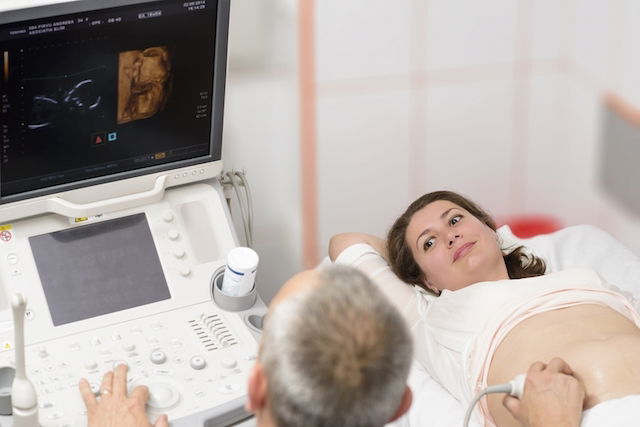
Prenatal tests for Down syndrome
Some tests can be done during pregnancy to assess the chances of the fetus having Down syndrome. The main tests that may be performed include:
-
Chorionic villus sampling, which can be done from the 10th week of pregnancy and involves removing a small sample of the placenta, which has genetic material that is usually identical to the fetus’s
-
Maternal serum screening, which is usually done in the first or second trimester and involves blood tests that measure substances produced during pregnancy by the placenta and the fetus
-
Nuchal translucency, which may be recommended in the first trimester and is used to measure the thickness at the back of the fetus’s neck
-
Amniocentesis, which involves removing a sample of amniotic fluid and is usually done after the 15th week of pregnancy
-
Cordocentesis, which involves collecting a sample of the fetus’s blood from the umbilical cord and may be done from the 18th week of pregnancy onward, although it is rarely used today for Down syndrome testing
According to the CDC, screening tests can estimate the chance of Down syndrome during pregnancy, while diagnostic tests can confirm whether the fetus has the condition.
Based on these tests, the doctor can assess the chances of Down syndrome or confirm whether there is an extra copy of chromosome 21 (trisomy 21), which causes Down syndrome.
Diagnosis after birth
When Down syndrome is not diagnosed during pregnancy, it can be confirmed soon after birth by observing certain characteristics, such as:
-
An extra fold in the eyelids, which can make the eyes look more closed and slanted upward
-
A single crease across the palm of the hand
-
A wider nose
-
A flat face
-
A large tongue and a very high-arched palate
-
Smaller ears that sit lower on the head
-
Fine, thin hair
-
Short fingers, with the pinky finger possibly curved
-
A larger gap between the big toe and the other toes
-
A wide neck with extra skin at the back of the neck
The more characteristic features a baby has, the higher the likelihood of Down syndrome. However, a single feature does not confirm the diagnosis. According to the CDC, a clinical diagnosis of trisomy 21 should be confirmed with genetic testing, usually with a karyotype from the infant’s blood or tissue.
Children with Down syndrome often reach milestones, such as sitting, crawling, and walking, later than expected. They also usually have some degree of intellectual disability, ranging from mild to severe.
According to the American Academy of Pediatrics, Down syndrome is the most common chromosomal cause of intellectual disability.
