


- Red spots on the legs that spread across the body or appear with pain, intense itching, fever, or headache may indicate a more serious illness and should be evaluated by a doctor.
- Small red or purple spots that do not fade when pressed, appear in clusters, or occur with unusual bruising or bleeding can signal blood or clotting disorders.
- Painful red patches, swelling, or worsening skin changes such as crusting, flaking, or blistering should be assessed by a healthcare provider to rule out inflammatory, autoimmune, or infectious conditions.
Red spots on legs are a common skin change that may appear suddenly or develop gradually over time. In many cases they are harmless and linked to insect bites, mild allergies, or skin irritation.
Some causes of red spots on legs involve skin conditions such as eczema, keratosis pilaris, fungal infections, or contact dermatitis. Circulation problems, medication reactions, and inflammatory conditions can also lead to red or purple spots on the legs.
Certain symptoms together with red spots on legs may suggest a more serious condition, including vasculitis, petechiae, psoriasis, or erythema nodosum. Treatment varies depending on the cause and may include antihistamines, antifungal medications, anti-inflammatory creams, or medical evaluation to identify underlying disease.
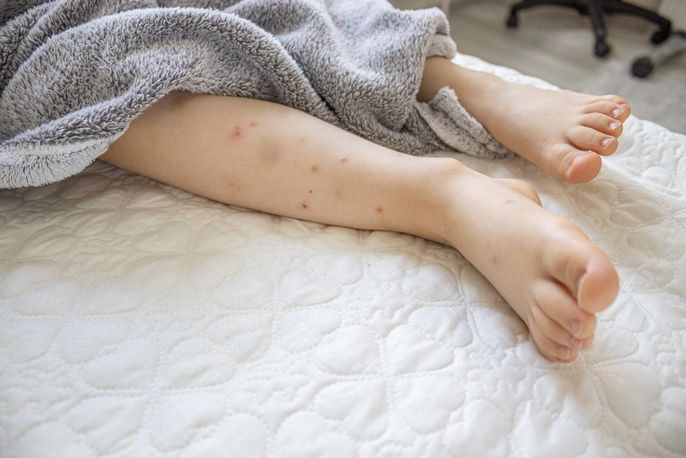
What causes red spots on the legs?
The most common causes of red spots on the legs include:
1. Insect bites
Red spots that emerge due to bug bites will usually be raised and itchy. This is the most common cause of red spots on the legs. Bites tend to occur on the legs because they are the most accessible area of the body for bugs like ants and mosquitoes.
Also recommended: Why do mosquito bites itch? tuasaude.com/en/doctor-says/why-do-mosquito-bites-itchHow to treat: You should avoid itching your legs, as you may increase the risk for infection in the area. You should use mosquito repellent to prevent new bites. There are gels, creams and ointments available over-the-counter to soothe itching, although some people may need to take anti-histamines to relieve more intense symptoms.
Check out these natural mosquito repellent recipes that you can make at home to keep bugs away.
2. Allergies
A skin allergy is the second most common cause of red spots on the legs. These spots can be red or white in color, and tend to be itchy and fluid-filled. Usually, they appear due to direct contact with plants, fur, medications, foods or pollen. Some people may also experience an allergy to their clothing fabric or clothing detergents.
How to treat: Ideally, you should identify what is triggering the allergy and avoid contact with it. You may also use an antiallergic medication, like loratadine or dexchlorpheniramine, to relieve symptoms.
3. Eczema
Eczema may manifest as red spots on the legs and elsewhere on the body. These spots are very itchy and can become swollen. It is usually triggered by contact with a specific object or substance that irritates the skin, like synthetic fabrics. Learn more about the symptoms of eczema and what can cause it.
How to treat: You are advised to see a dermatologist to start appropriate treatment. There is no cure for eczema, but symptoms can be managed with the right plan. The doctor will typically prescribe anti-allergic medications, creams or ointments (like hydrocortisone) and antibiotics if there are any signs of infection present. Read more about eczema cream your doctor can prescribe.
4. Use of medications
Some medications, like ketoprofen and glucosamine, can cause red spots to emerge on the legs and the rest of the body. They may also cause symptoms like sore throat, chills, fever and blood in the urine.
How to treat: You should report any side-effects to your prescriber as soon as possible. The doctor will determine whether the medication should be discontinued or swapped for another.
5. Keratosis pilaris
Keratosis pilaris is a skin condition characterized by excess production of keratin in the skin. It develops into small red patches that look like a pimple. These can appear on the legs or the rest of the body. Keratosis pilaris is more common in people with dry skin or in people with inflammatory illnesses, like asthma or rhinitis.
Read more about keratosis pilaris to see which symptoms it can cause and how it is treated.
How to treat: You are advised to see a dermatologist to start the most appropriate treatment. There is no cure for keratosis pilaris, however symptoms can be managed with prescription or over-the-counter creams as advised by your doctor.
6. Fungal rash
An fungal outbreak on the skin can spread in the legs and up to the rest of the body. These spots will usually emerge as red spots on the body that are itchy. They can start to flake and form blisters.
How to treat: Treatment for a fungal rash usually involves the use of prescription antifungals, like ketoconazole or fluconazole. These can be applied directly to the skin.
7. Poor circulation
Poor circulation occurs when blood is unable to flow at an optimal rate through arteries and veins. It is associated with symptoms like red spots on the legs, intense itching, cold feet, tingling and dry skin.
Learn more about the symptoms of poor circulation in the legs and what can cause it.
How to treat: It is important to follow the treatment plan outlined by your family doctor or cardiologist to restore adequate blood flow. To relieve symptoms, the doctor may recommend compression stockings or medications that promote circulation.
Exercise and a light, low-salt diet that is rich in vitamin C can also help to relieve symptoms and prevent worsening.
8. Petechiae or purpura
Petechiae or purpura are conditions that cause small red or purple spots on the skin due to bleeding underneath. They can be linked to problems with blood clotting, infections, or autoimmune conditions.
Common symptoms include clusters of pinpoint spots that do not fade when pressed, sometimes accompanied by easy bruising or bleeding from other areas.
How to treat: Treatment depends on the underlying cause. A doctor may order blood tests to check platelet levels and clotting function. Management usually involves treating the main condition, and in some cases, medications may be needed to prevent further bleeding.
9. Vasculitis
Vasculitis occurs when blood vessels become inflamed, which can restrict circulation and lead to tissue damage. This condition can appear suddenly or develop gradually depending on the trigger. Symptoms can include red or purple patches on the legs, pain, swelling, and sometimes fever or fatigue.
How to treat: Treatment is directed by a doctor and often involves corticosteroids or immunosuppressive medications to reduce vessel inflammation. Managing any underlying triggers, such as infections or autoimmune disorders, is also important.
10. Erythema nodosum
Erythema nodosum causes painful red nodules, most often on the shins. It is commonly associated with infections, inflammatory bowel disease, or reactions to medications. Other symptoms may include fever, joint pain, and general tiredness in addition to the leg nodules.
How to treat: Management typically includes rest and anti-inflammatory medications. Treating any associated infection or stopping a triggering medication may also help symptoms improve.
11. Diabetic dermopathy
Diabetic dermopathy, also called shin spots, appears as light brown to reddish spots on the front of the legs. These spots are common in people with diabetes and are related to changes in the small blood vessels of the skin. Symptoms may include patches that are slightly scaly or depressed, but they usually do not cause pain or itching.
How to treat: There is no specific treatment, but good control of blood sugar can help reduce the risk of worsening. Regular follow-up with a healthcare provider is recommended to manage diabetes and related skin changes.
12. Psoriasis
Psoriasis is a chronic skin condition where the immune system speeds up the skin cell cycle, leading to red patches or spots. These patches can vary in size and often appear on the legs as well as other parts of the body. Other symptoms may include silvery scales on top of the patches, itching, and occasional burning or soreness.
How to treat: Treatment usually involves creams or ointments with corticosteroids or other medications to reduce inflammation. More severe cases may need systemic medications or light therapy, guided by a dermatologist.
13. Contact dermatitis
Contact dermatitis is a type of skin irritation that happens when the skin comes in direct contact with an irritating or allergenic substance. Everyday products like detergents, soaps, or chemicals are common triggers.
Symptoms may include red, itchy spots or rashes, swelling, and sometimes blistering on the affected areas.
How to treat: The main step is to avoid the substance causing irritation. A doctor may recommend soothing creams, corticosteroid ointments, or antihistamines to relieve itching and redness.
Be sure to read more about what can cause red spots on the skin and what you can do to relieve any symptoms.
When to see a doctor
You should see a dermatologist or family doctor if you notice red spots on the legs as well as symptoms like:
- Red spots throughout the body
- Pain and irritation
- Headache
- Intense itching
- Fever
- Nausea
- Bleeding
These symptoms may be a sign of a more serious illness, like rubeola or lupus, therefore it is important to see a doctor as soon as you notice these signs.