


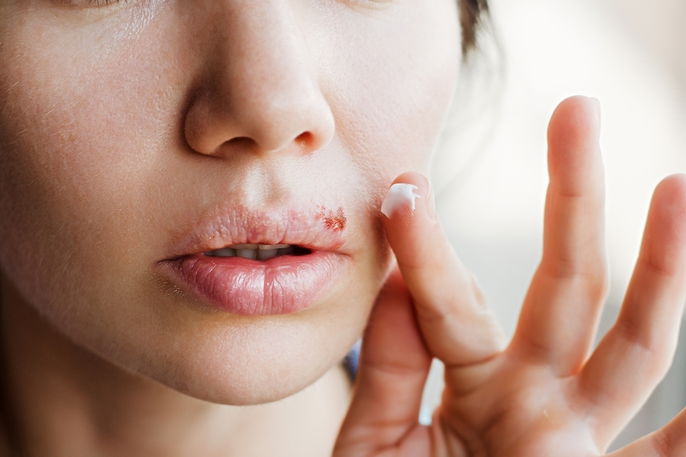
Pimples around the mouth are usually caused by acne, but may also be caused by folliculitis or oral herpes or even inflammatory conditions like perioral dermatitis or angular cheilitis.
Depending on the cause, multiple pimples may appear around the mouth or on other parts of the face, such as around the nose, eyes, or forehead. Symptoms may also include redness, pain, or swelling.
It is recommended to consult a dermatologist for pimples around the mouth that are persistent or do not go away. Treatment may involve changes in diet and skincare regimen and/or the use of medications like antibiotics or antivirals.
Common causes
The main causes of pimples around the mouth are:
1. Acne
Pimples around the mouth caused by acne can be initially identified by a raised bump on the skin that can soon become red and filled with pus. It is also common to have pimples on the nose, forehead, shoulders, and upper back.
What to do: it is recommended to consult a dermatologist, especially if you develop multiple pimples on the face. Acne treatment may involve applying antimicrobial creams and ointments, and, in more severe cases, oral antibiotics.
It is important to consume fiber-rich foods like fruits and vegetables and avoid foods high in sugar and fat like cakes, cookies, and desserts, which can make pimples worse.
Check out foods that help with acne.
2. Oral herpes
Oral herpes, or cold sores, can cause lesions around the mouth that appear similar to pimples, especially around the lips. These lesions typically emerge in small clusters and cause skin redness and pain. They can also become inflamed and filled with pus.
What to do: oral lesions caused by the herpes virus tend to improve within 2 to 6 weeks without any specific treatment.
Your primary care provider may prescribe antiviral medications, however, such as acyclovir or valacyclovir, to help the lesions go away faster. These cold sore medicines are prescribed in the form of an ointment or pills.
3. Folliculitis
Folliculitis is an infection involving the hair follicle, more commonly affecting people who shave or wax frequently. Folliculitis can appear as inflamed red bumps around the mouth, sometimes containing pus.
Folliculitis can occur in any part of the body where there is hair, primarily on the face and the scalp.
What to do: in the case of folliculitis, lesions tend to resolve after about 7 to 10 days with good skin hygiene that includes cleansing the skin with soap and warm water. Warm compresses can also be applied to help relieve symptoms.
It is important to consult a dermatologist, especially for multiple lesions, as antibiotics may be needed in the form of an ointment or pills.
4. Perioral dermatitis
Perioral dermatitis can also cause lesions similar to pimples, with symptoms like redness, peeling, and pus-filled bumps. It is also common for perioral dermatitis to affect the skin around the eyes and nose.
Perioral dermatitis tends to worsen with the application of corticosteroid ointments and skincare products and is more common in young women.
What to do: antibiotics in the form of an ointment or pills are typically prescribed by a dermatologist in order to decrease the inflammation associated with perioral dermatitis. With treatment, symptoms tend to improve within a few weeks.
Additionally, it is recommended to avoid using corticosteroid ointments without a medical indication as well as skincare products that may worsen symptoms.
5. Angular cheilitis
Angular cheilitis can sometimes be confused with pimples around the mouth, with symptoms like redness of the skin in addition to localized pain and swelling of the affected area.
Angular cheilitis normally affects the corners of the mouth and is more often seen in cases of poor oral hygiene or an accumulation of saliva in the corners of the mouth, as well as in people who smoke or are living with diabetes or HIV.
What to do: it is important to consult a dermatologist if you think you might have angular cheilitis. Treatment may involve medications like antifungals and corticosteroids in the form of ointments or pills, as well as vitamin or mineral supplements.
Other recommendations may include adopting a healthier diet in the case of nutritional deficiencies, avoiding licking your lips, and quitting smoking, for example.
Who to see
It is recommended to see a dermatologist if you are experiencing pimples around the mouth, as dermatologists specialize in treating a wide range of skin conditions. A primary care provider may also be able to diagnose and treat these conditions or can provide a referral to a dermatologist.
Dermatologists can use dermoscopy to observe the characteristics of skin lesions with more detail in order to confirm a diagnosis and prescribe the most appropriate treatment.