


Lavender (Lavandula angustifolia) is a medicinal plant known for its calming, relaxing, and antidepressant properties. It is commonly used to help manage anxiety, depression, indigestion, and insect bites, and may support better sleep and stress relief.
Rich in essential oils and active compounds, lavender can be used in several forms, including tea, baths, and aromatherapy with essential oils. These preparations can help promote relaxation, relieve migraines, reduce blood pressure, and improve overall well-being.
Lavender is available in health food stores, pharmacies, and local markets, and should be used under the guidance of a healthcare professional. Its versatile uses and natural effects make it one of the most popular plants for promoting relaxation and emotional balance.
Health benefits
Lavender can be used to treat several conditions and offers many benefits for the body, such as:
1. Decreasing anxiety and agitation
Lavender is rich in volatile oils that have calming and sedating effects to help reduce anxiety and agitation. Lavender may therefore be used to complement prescribed treatments for these conditions.
2. Reducing blood pressure
Lavender, in the form of an essential oil, can help to reduce blood pressure when used as an aromatherapy agent. It can be used as a complement to medical treatment of hypertension.
3. Lowering fever
Lavender may help reduce body temperature and is sometimes used in traditional medicine to provide comfort during a fever.
Because of its calming and sedative properties, lavender can help you to achieve a better night's sleep when you have a fever.
4. Promoting canker sore healing
Due to its healing, anti-inflammatory and analgesic properties, lavender can promote the healing of canker sores. It can also help to reduce pain, inflammation, irritation, and the size of canker sores.
5. Stabilizing heart rate
Lavender can help to stabilize heart rate and decrease the heart's excitability. It may be beneficial for the treatment of heart palpitations, especially when used in aromatherapy.
6. Decreasing migraine pain
Due to its analgesic properties, lavender can help to reduce migraines and headaches, and relieve related symptoms like nausea, vomiting or increased sensitivity to light.
Lavender can be used to relieve acute migraine flare-ups, however it should not be used as a treatment to prevent attacks, as it may trigger flare-ups.
Read about other natural remedies for migraines.
7. Promoting relaxation
Lavender possesses calming and sedative properties, which promote relaxation of the body and reduce anxiety.
8. Improving sleep quality
Lavender helps to improve quality and duration of sleep and can help combat insomnia. It contains calming effects that promote relaxation and reduce agitation.
9. Reducing stress
Lavender helps to reduce stress as it has calming, sedative, and relaxing properties.
10. Combating depression
Due to its anxiolytic and antidepressant properties, lavender can help with the treatment of depression and anxiety. It promotes body relaxation and improves sleep quality.
However, lavender should not be used as a substitute for medical treatment prescribed by a healthcare provider. It can be used instead as a complementary option alongside the recommended treatment.
How to use
The parts of the lavender plant that are most commonly used in preparations are the flowers, leaves, and stem. It can be used to make tea, essential oils, or added to culinary recipes.
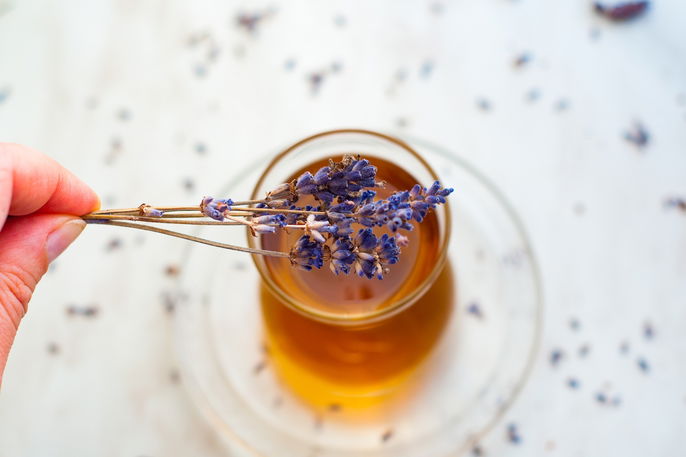
1. Lavender tea
Lavender tea is great for treating digestion problems, migraines, anxiety and menstrual cramps.
Ingredients:
- 1 tsp of lavender flowers;
- 1 cup of boiling water.
How to prepare:
Add the lavender flowers to the cup of boiling water and let it infuse for 5 to 10 minutes. Then strain, wait for it to cool, and drink. This tea can be consumed up to 3 times a day, and is recommended after each main meal.
2. Warm lavender bath
A warm lavender bath contains excellent relaxing, calming, and tranquilizing effects that can help to treat excess stress, anxiety, and sleep problems. To prepare a lavender bath, simply add 100 g of dried lavender flowers or 6-7 drops of the plant's essential oil to the warm water in a tub.
Another way to use lavender in the bath is to place 100 g of lavender flowers in a thin cloth and tie it up to make a bag. Secure the bag on the the shower head using a string. The water will come into contact with the plant and will spread its medicinal properties over the body.
Instead of dried flowers, the plant's essential oil can also be used, and can be added to chamomile or mint tea bags hanging from the shower head.
To treat sleep and stress problems, bags with dried lavender flowers can also be placed under your pillow, so that they can act overnight.
3. Essential oil massage
A massage with lavender essential oil on the temples is particularly recommended for soothing headaches that are caused by stress and muscle tension. To perform this massage, rub 4 to 5 drops of essential oil on your fingertips and then massage your temples in circular movements for a few minutes.
If you feel that the headache is caused by tension in the neck, then extend your massage from the temples to the back of the neck, also in circular movements.
Furthermore, due to its calming properties, this essential oil can also be used to treat insect bites. You can apply 1 to 2 drops of oil directly on the bite.
Side effects
The main side effect of lavender is drowsiness, due to its relaxing and calming properties. However, this only occurs when it is ingested in excessive doses.
High doses of lavender can also cause constipation, contact dermatitis, confusion and blood in the urine.
Contraindications for use
Lavender should not be used by children under 12 years of age or people with gastritis or gastric ulcers. It is also not recommended during pregnancy or lactation.
Because it can cause drowsiness, ingesting lavender is not recommended while operating vehicles or heavy machinery.
In addition, you are advised not to ingest lavender together with medicines or substances that depress the central nervous system, like alcohol, drugs, or hypnotic and anxiolytic medications.