


To bleach hair at home, it is important to understand your hair type, choose a good-quality bleach, and moisturize your hair before bleaching. These steps can help reduce damage to the strands.
Hair bleaching is a chemical process used to lighten the hair. It usually involves hydrogen peroxide, which opens the hair cuticle, and bleach, which penetrates the strand to remove the hair’s natural color.
Bleaching can be very harsh on the hair and may leave it dry, dull, and brittle. For this reason, it is best to have hair bleached by a professional at a salon and to avoid bleaching more often than every 6 months.
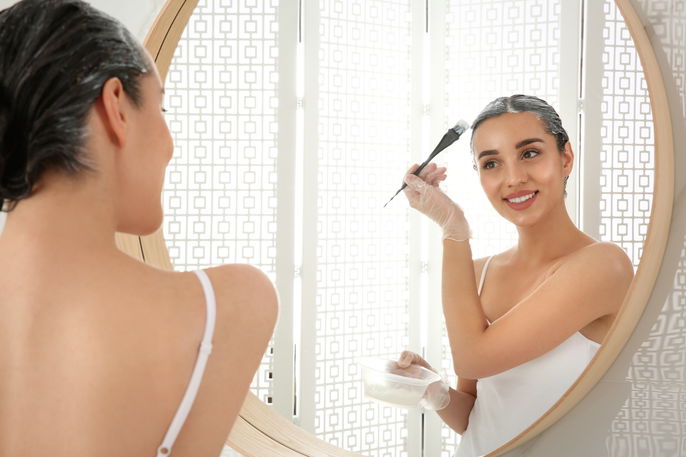
Precautions before bleaching
Some precautions before bleaching to help prevent brittle or damaged hair include:
-
Separate a small section of hair and check whether the strands are brittle, frizzy, or have split ends. If any of these signs are present, it is recommended not to apply any chemical treatment before being evaluated by a professional;
-
Apply a small amount of bleaching cream to the section and wait 15 minutes;
-
Check whether the section remains intact, meaning there are no changes to the strand, and whether the hair color has changed.
This test is essential before starting any treatment and should be done by a professional at a hair salon or at home.
If there is any change in the appearance or structure of the strand after applying the cream, bleaching is not recommended. In this case, it is best to have the hair evaluated by a qualified professional.
Step-by-step guide on how to bleach hair at home
Before bleaching, the hair should be dry and, preferably, unwashed, as the hair’s natural oils help protect the strands. It is also recommended to wear disposable gloves while preparing the cream and applying it to the hair to help prevent skin irritation.
The step-by-step guide on how to bleach hair at home is:
-
Choose a good-quality bleach that can bleach and moisturize the hair at the same time;
-
Choose the hydrogen peroxide that will react with the bleach, which can range from 10 to 40 volume. It is important to remember that the higher the volume of hydrogen peroxide, the faster and stronger the lightening effect will be. However, it can also damage the hair more quickly;
-
Mix the bleaching powder and hydrogen peroxide until they form a creamy, smooth mixture. In general, 1 part powder to 2 parts hydrogen peroxide is used;
-
Divide the hair into sections using clips. The back of the hair is the hardest area to see, so if it is difficult to reach, it is recommended to ask another person to help apply the product;
-
Apply a moisturizing cream to the skin around the hairline, such as the forehead, nape of the neck, and ears, to help prevent the product from staining or irritating the skin;
-
Apply the product with a hair-coloring brush, starting at the ends of the strands and then applying it throughout the section. The roots are more sensitive and usually bleach faster than the ends. If the goal is to bleach all the hair, including the roots, it is best to apply the product throughout the lengths first, and then apply it near the scalp so the result is more even;
-
Watch the product’s processing time and avoid leaving it on the hair for more than 30 to 40 minutes. A helpful tip is to check every 5 to 10 minutes to see whether the desired shade has been reached, as bleaching time can vary depending on the current hair color and whether other products have already been used that may make bleaching more difficult;
-
Wash the hair with shampoo and rinse well to remove all product residue;
-
Finish with a toning process, using products that correct the hair color and help prevent unwanted tones, such as yellow, orange, or gray tones. These are usually purple or blue products, but they can be replaced with toners, hair dyes, or other color correctors.
After finishing the process, it is recommended to apply a deep moisturizing treatment to help restore the strands. To boost the effect of the moisturizing mask, a keratin ampoule can be added.
Care after bleaching
After bleaching, the hair cuticles remain open, which causes the hair to lose nutrients.
Therefore, some important precautions to help keep the hair healthy, silky, and shiny include:
1. Moisturize
Doing weekly or biweekly moisturizing treatments at home, and having a hair reconstruction treatment at the salon once a month, helps keep the hair healthy, prevent breakage, and increase shine.
2. Increase protein intake
Choosing a protein-rich diet with foods such as eggs and gelatin, for example, helps with hair formation, helping hair grow faster and healthier.
3. Avoid washing hair with hot water
Avoiding very hot water when washing the hair is very important, as heat makes it easier for the hair cuticles to open, leaving the hair brittle.
4. Let hair dry naturally
Letting hair dry naturally after washing, and using a good leave-in product made with argan oil or coconut oil, helps protect the strands from damage caused by heat, wind, and sun.
If using a blow dryer, it should be kept 30 cm away from the hair, and a heat protectant should be applied to the hair beforehand.
5. Comb hair carefully
Combing hair carefully, detangling it gently, and preferably using wide-tooth combs also helps prevent damage to the strands.
6. Follow a hair care schedule
It is recommended to follow a hair care schedule, which is an intensive moisturizing treatment divided into phases and can help restore damaged hair.
