


- Hip dysplasia happens when the femur does not fit properly into the hip socket, which can affect hip movement and leg length.
- Symptoms can include uneven leg length, hip clicking, reduced leg movement, uneven skin folds, limping, or walking on the toes.
- Treatment depends on the child’s age and may involve a Pavlik harness, cast, brace, or surgery.
Hip dysplasia is a change in how the femur fits into the hip socket. This can make the joint looser and lead to reduced hip mobility or differences in leg length.
Developmental dysplasia of the hip (DDH) is caused by congenital changes. It is more likely when the baby stays in a seated position for most of pregnancy, has restricted growth in the uterus, or has a family history of this condition.
Treatment for developmental dysplasia of the hip is guided by a pediatrician or orthopedist. Depending on the child's age, it may involve a special harness, a cast, or surgery.
Main symptoms
The main symptoms of developmental dysplasia of the hip are:
-
Legs that are different lengths or turned outward
-
Clicking or popping sounds in the hip
-
Less mobility and flexibility in one leg, which may be noticed during diaper changes
-
Skin folds on the thigh and buttock that look very different in size
-
Limping or walking on the toes of one foot
Hip pain can also occur and is a common symptom in adolescents or young adults.
In many cases, hip dysplasia does not cause any obvious symptoms. According to the American Academy of Pediatrics, developmental dysplasia of the hip is often identified through routine physical examination and risk-factor assessment.
For this reason, it is very important to attend regular pediatric checkups, so the doctor can monitor the baby’s, child’s, or adolescent’s development over time and detect any problems that may arise early.
Hip dysplasia in babies
Hip dysplasia in babies can be detected by looking for typical symptoms of the condition, as well as delays in how the baby learns to sit, crawl, or walk.
Because it can affect development and make walking difficult, diagnosis should be made as early as possible so treatment can begin and the dysplasia can be fully corrected.
Confirming a diagnosis
Hip dysplasia is usually identified during routine exams by a pediatrician and may be confirmed by an orthopedist through physical examination, including specific orthopedic tests.
To confirm the diagnosis of hip dysplasia, the doctor may order imaging tests, such as an ultrasound for babies under 6 months old or an X-ray for older babies and children.
Main tests
The tests for hip dysplasia that may be performed by a healthcare provider are:
Tests for developmental dysplasia of the hip are usually performed within the first 3 days after birth.
Risk factors
The main risk factors for developmental dysplasia of the hip include:
- Family history of hip dysplasia
- Female sex
- Low levels of amniotic fluid during pregnancy
- Baby being large for gestational age (LGA)
- Twin or multiple pregnancy
- Post-term birth
- Breech position, meaning the baby is seated for most of the pregnancy or during the last trimester
According to the American Academy of Pediatrics, breech position, family history, female sex, and incorrect lower-extremity swaddling are important risk factors for developmental dysplasia of the hip.
Another possible cause of developmental dysplasia of the hip is swaddling the baby with the legs extended.
Treatment options
Treatment for developmental dysplasia of the hip should be guided by a pediatrician or orthopedist to correct the abnormal fit between the femur and the hip socket and prevent complications.
Treatment options are usually selected based on the child’s age:
1. Newborns and babies up to 6 months
The main treatments for hip dysplasia in newborns or babies up to 6 months are:
Pavlik harness
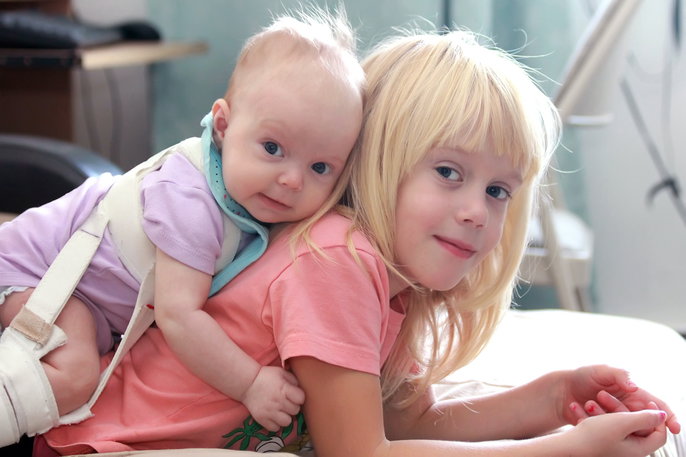
The Pavlik harness is usually the first treatment option. It is attached to the baby’s legs and chest and may be used for 6 to 12 weeks, depending on the baby’s age and the severity of the dysplasia.
With this harness, the baby’s legs stay bent and open, which is the ideal position for the hip joint to develop normally.
The Pavlik harness should be worn all day and night. It should only be removed for bathing and placed back on immediately afterward.
Using the Pavlik harness does not cause pain, and most babies get used to it within a few days. Because of this, it does not need to be removed just because the baby seems fussy or is crying.
Cast placement
After 2 to 3 weeks with the Pavlik harness, the baby should be examined again so the pediatrician can check whether the joint is properly positioned.
If it is not, the harness is removed and a cast is applied. If the joint is properly positioned, the harness should be kept in place until the child no longer has hip changes, which may take 1 to 4 months.
2. Babies from 6 months to 1 year
When dysplasia is only discovered after the baby is older than 6 months, treatment may include:
-
Manual repositioning of the joint by the orthopedist
-
Use of a cast for 2 to 3 months immediately after the joint is repositioned, to keep it in the correct position
-
Use of another device, such as a Milgram brace, for another 2 to 3 months after the cast is removed
After this period, the child should be evaluated again to check whether development is progressing correctly. If it is not, the doctor may recommend surgery.
3. After starting to walk
When the diagnosis is made later, after the child has started walking, or in adolescents or young adults, hip dysplasia is usually treated with surgery.
This is because casts and the Pavlik harness are not effective after the first year of life.
Potential complications
When dysplasia is diagnosed late, months or years after birth, there is a risk of complications such as:
-
One leg shorter than the other
-
Limping
-
Arthritis of the hip at a young age
-
Scoliosis
-
Pain in the legs, hips, and back
-
Avascular necrosis of the femoral head
In some cases, the child may need to walk with crutches and may need physical therapy for long periods.
Complications of hip dysplasia can be prevented with early diagnosis and proper treatment, which should begin as soon as possible.
How to prevent
Most cases of hip dysplasia cannot be prevented. However, to reduce the risk after birth, avoid dressing the baby in too many clothes that limit movement. The baby should also not be kept swaddled for long periods with the legs straight or pressed together, as this can affect hip development.
Watching how your baby moves and checking whether they can comfortably move their hips and bend their knees can also help identify any problems. If you notice anything unusual, tell your pediatrician so your baby can be evaluated and started on the most appropriate treatment to help prevent complications.