


Front raises are a strength training exercise that helps strengthen and increase the muscle mass of the anterior deltoid, the front part of the shoulder. This movement also enhances shoulder definition and overall upper-body appearance.
This exercise can be performed at the gym, at home, or outdoors, and there are several variations depending on the equipment used, such as dumbbells, a barbell, a weight plate, or a cable machine. While front raises mainly isolate the anterior deltoid, they also engage other stabilizing muscles that help control arm movement during the lift.
It’s important to perform front raises under the supervision of a fitness professional, who can recommend the appropriate weight and technique based on your physical condition and level of experience.

Muscles worked
Front raises specifically target the anterior deltoid muscle, helping to increase muscle mass (hypertrophy) and strengthen the shoulders.
Because this exercise isolates the front of the shoulder, it helps improve definition in both the front and sides of the shoulders.
How to perform a dumbbell front raise
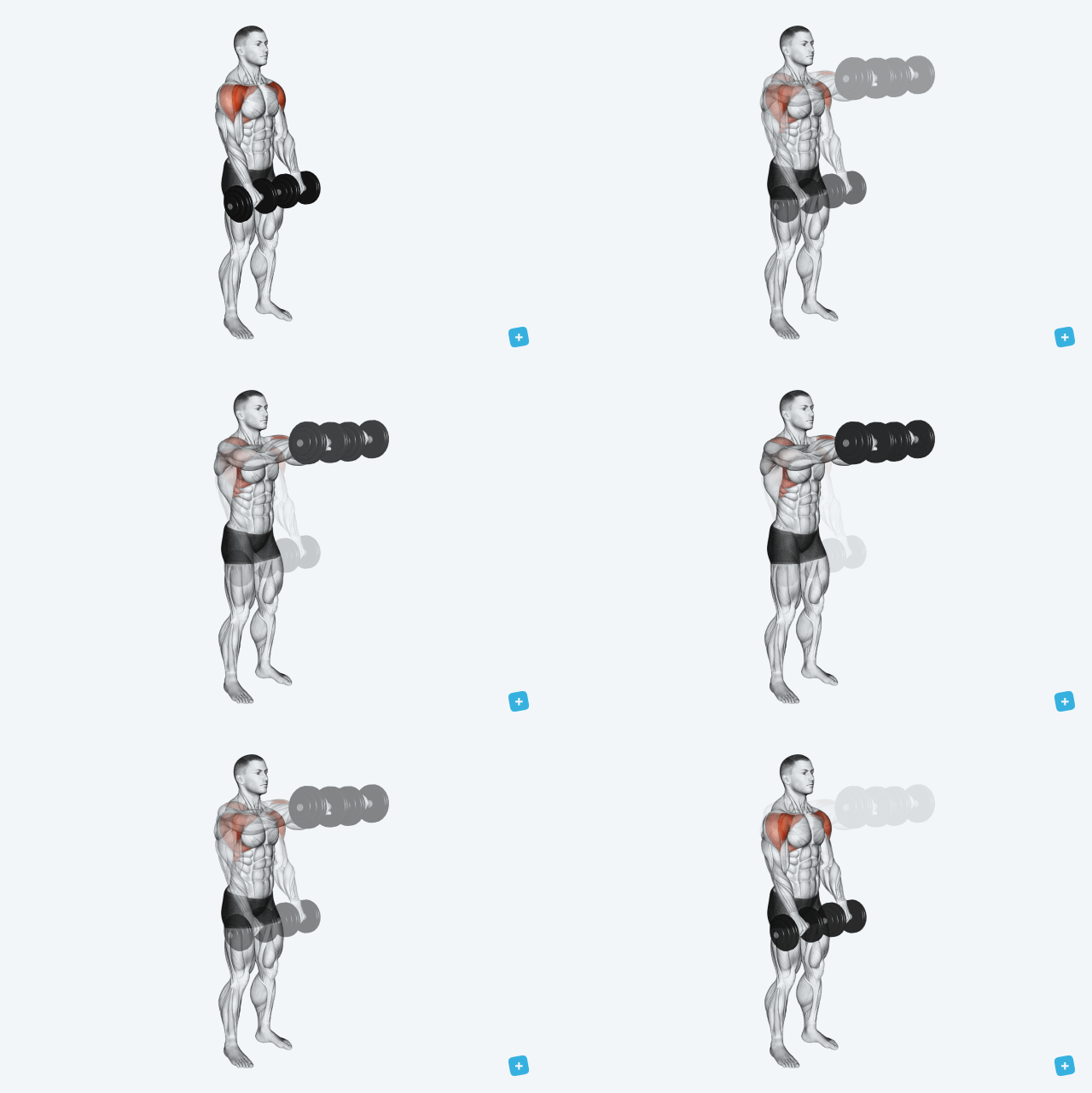
To perform front raises with dumbbells:
-
Stand with your feet shoulder-width apart, arms extended down in front of your thighs;
-
Hold a dumbbell in each hand with your palms facing your body (pronated grip);
-
Keep your back straight and your core engaged throughout the movement;
-
Lift both arms straight out in front of you with a slight bend in the elbows to avoid joint strain, raising until the dumbbells reach shoulder height;
-
Keep your wrists steady during the movement to prevent injury;
-
Hold the position for a few seconds at the top;
-
Slowly lower your arms back to the starting position.
Perform 2 to 3 sets of 10 to 12 repetitions, resting for 60 to 90 seconds between sets, as recommended by your trainer.
Front raises can also be done using a barbell, a weight plate, or a cable machine. Each variation still focuses on the anterior deltoid but may recruit different muscles to perform and stabilize the movement.
Different variations
Variations of the traditional front raise include:
1. Barbell front raise
The barbell front raise is performed using a barbell with weights secured on each end with safety clips. The movement is the same as the dumbbell version, but both arms are lifted simultaneously, making it impossible to alternate or perform the movement with one arm at a time.
2. Cable front raise
The cable front raise, or crossover front raise, is performed on a cable machine with the appropriate weight selected as advised by a fitness professional. Always make sure to attach the safety clips to avoid accidents.
Stand with your back facing the machine, hinge slightly forward, and hold the bar with a pronated grip (palms facing down). Pull the cable upward until your arms are fully extended at shoulder height.
3. Front raise with weight plate
This variation involves holding a weight plate with both hands and lifting your arms together until they are fully extended in front of your body, raising the plate to face level.
4. Alternating front raise
The alternating front raise is performed with dumbbells, lifting one arm at a time in an alternating motion.
5. Unilateral front raise
The unilateral front raise is performed by lifting only one arm at a time, then switching to the other arm. This variation is also done using dumbbells.
6. Supinated front raise
The supinated front raise is a variation where the palms face away from the body (supinated grip). It can be performed with dumbbells or a barbell.
7. Pronated front raise
The pronated front raise is performed with the palms facing toward the body (pronated grip).
Safety precautions
Some important precautions when performing front raises include:
-
Keep your spine straight and your core engaged;
-
Maintain your head and neck aligned with your spine;
-
Keep a slight bend in your elbows to avoid joint strain;
-
Inhale as you lift your arms;
-
Exhale as you lower your arms;
-
Keep your feet firmly planted on the floor.
Maintaining proper posture, using correct form, and selecting an appropriate weight are essential to prevent injuries. For this reason, front raises should always be performed under the supervision of a qualified fitness professional.
Also recommended: 6 At-Home Shoulder Workouts (Plus Stretches) tuasaude.com/en/at-home-shoulder-workout