


- A first degree burn affects the outermost layer of skin and can cause redness, swelling, pain, sensitivity, itching, and peeling.
- First degree burns are often caused by sun exposure, hot liquids, steam, fire, hot surfaces, or chemical products.
- Medical care is recommended for large burns, burns in babies or older adults, or burns involving sensitive areas, electricity, or chemicals.
A first degree burn is a superficial burn that affects the outermost layer of the skin, called the epidermis. It can cause symptoms such as redness, swelling, increased sensitivity to touch, and pain.
This type of burn is most often caused by prolonged sun exposure. It can also happen after contact with hot objects or surfaces, or from exposure to hot water, hot oil, or steam.
In most cases, a first degree burn can be treated at home with cold compresses, pain relievers, and burn ointments. However, if the pain is severe, the burn affects a large area of the body, or it occurs in children or older adults, it is recommended to go to the emergency room right away.
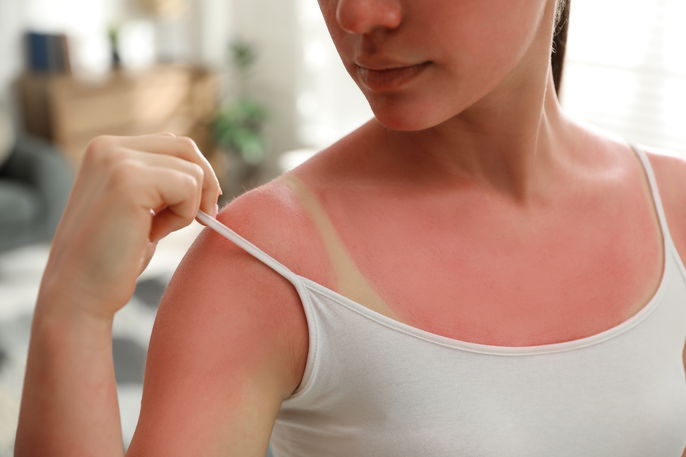
What does a first degree burn look like?
The main signs that can help identify a first degree burn are:
- Redness, in lighter skin tones
- Reddish-brown skin, in darker skin tones
- Swelling and warmth in the affected area
- Pain for 2 to 3 days
- Increased sensitivity to touch
- Itching
- Skin peeling, usually 1 to 2 days after the injury
This type of burn affects only the epidermis, which is the outermost and most superficial layer of the skin, and does not cause blisters, as can happen with second degree burns.
However, in some cases, a person may have second-degree burns with blisters, or even third-degree burns, in areas where deeper layers of skin were affected.
Healing time
The healing time for a first degree burn usually ranges from 2 to 5 days. However, it may take longer if the burn affects larger areas of the body or if second or third degree burns are also present.
A first degree burn does not leave marks or scars on the skin after it heals.
Main causes
A first degree burn can be caused by prolonged sun exposure, hot steam, contact with scalding liquids such as hot water or hot oil, contact with fire, or contact with hot objects and surfaces.
In addition, a first degree burn can also happen due to chemical burns from contact with gasoline, acids, or sodium hydroxide, for example.
First aid
First aid for a first degree burn includes:
- Removing clothing and other objects that are near or on the burn area, such as bracelets, watches, or rings, for example
- Cooling the skin immediately by holding it under cool running water with a gentle flow for at least 20 minutes
- Taking a cool shower if the burn affects large areas of the body
- Placing a towel soaked in cold water on the face, if the burn is on the face
- Covering the affected area with a sterile compress or clean cloth moistened with saline solution or cold water
- Gently washing the affected area with mild soap
According to the American Academy of Dermatology, first degree burns usually heal on their own, but emergency care is recommended if the burn is very large, occurs in an infant or older adult, or may be more severe than expected.
When to see a doctor
According to the American Academy of Dermatology, burns should be evaluated by a healthcare provider if they are large, involve sensitive areas such as the face, hands, feet, or genitals, or occur in infants or older adults.
Based on the American Burn Association’s burn center referral criteria, burns involving the face, hands, feet, genitals, perineum, or major joints, as well as electrical and chemical burns, should be referred for specialized burn care.
Treatment options
Treatment for a first degree burn can almost always be done at home with measures such as:
-
Applying cold compresses to the area for about 15 minutes, several times a day
-
Taking pain relievers, such as acetaminophen or ibuprofen, as recommended by a doctor, to relieve pain and discomfort
-
Increasing water intake or, in the case of babies, offering more breast milk or formula to help prevent dehydration
-
Applying a home remedy for burns, such as aloe vera gel or honey
-
Protecting the affected skin from the sun by applying sunscreen and wearing clothing or a hat to cover the area
In addition, a healthcare provider may recommend burn ointments to help relieve symptoms and speed up healing.
Also recommended: What to Put on a Burn: 8 Creams + Ointments (& How to Treat) tuasaude.com/en/what-to-put-on-a-burnWhat to avoid
It is important not to apply very cold water or ice to the burn, as this can worsen the skin injury.
In addition, do not apply oil, greasy ointments, butter, olive oil, alcohol, sugar, coffee grounds, toothpaste, or any other substance to the burn.