


Dental anesthesia is used to prevent pain during common dental procedures, including cavity fillings, root canals, extractions, and dental implant placement. It may also be used during procedures such as an oral cavity biopsy.
After a dental procedure, the numbing effect may linger for a while and can feel uncomfortable in the lips, tongue, cheeks, or gums. Some practical measures may help symptoms feel less bothersome while the anesthesia gradually wears off.
Dental anesthesia can also cause temporary side effects, such as numbness, tingling or a pins-and-needles sensation, and dizziness. These effects typically improve as the anesthetic effect fades.
Indications for use
Dental anesthesia may be indicated in some clinical situations, such as:
-
Cavity restorations;
-
Root canal treatment;
-
Periodontal surgeries, such as grafts and deep tartar scaling;
-
Placement of dental implants;
-
Oral cavity biopsy.
In addition, anesthesia may be recommended for children and for people with dental phobia to support comfort and cooperation during procedures.
In people with neurological disorders, such as cerebral palsy and epilepsy, general anesthesia may be needed to prevent involuntary movements and reduce seizure risk during the procedure.
How it's applied
Dental anesthesia is administered by a dentist after reviewing the person’s medical history, including possible allergies, current medications, and chronic conditions, to help select the most appropriate anesthetic.
Next, the dentist cleans the gum area where the anesthetic will be applied using gauze soaked in an antiseptic, usually chlorhexidine.
To reduce discomfort from the needle, a topical anesthetic gel or spray, such as benzocaine, may be applied 1 to 2 minutes before the injection.
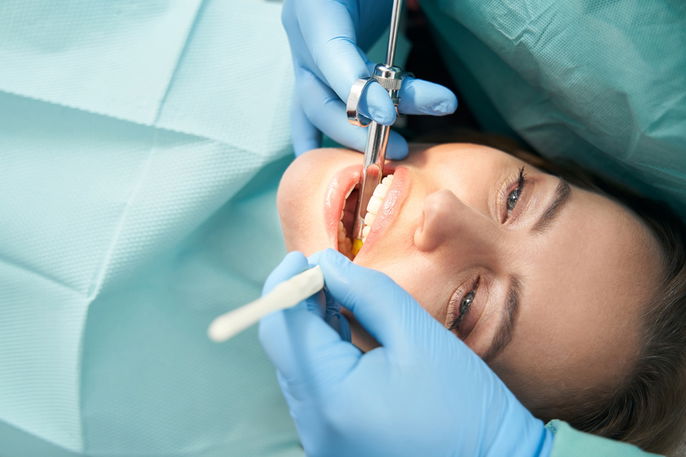
After the topical anesthetic takes effect, the dentist positions the syringe and slowly inserts the needle into the gum, injecting the local anesthetic, usually 1 to 2 mL.
Onset time is typically 2 to 10 minutes, depending on the technique used. The dentist may also check numbing effectiveness using light touch sensitivity tests.
If needed, the anesthesia may be reinforced during the procedure.
Duration of action
Dental anesthesia usually lasts 1 to 3 hours, depending on the anesthetic used, such as lidocaine or bupivacaine.
Different types
Some types of dental anesthesia include:
-
Local anesthesia, the most commonly used approach, which numbs a specific area of the mouth and is given by injection into the gums using a needle and syringe;
-
Nerve block, a technique that numbs larger areas of the mouth using a local anesthetic injection placed at deeper, more targeted sites;
-
Conscious sedation, typically delivered through inhaled nitrous oxide (laughing gas) or oral or intravenous medications to promote relaxation and reduce anxiety;
-
General anesthesia, complete sedation that allows a person to enter a deep sleep, which may be administered through an IV injection or inhaled sedative gases.
In addition, newer devices to deliver local dental anesthesia have been developed, such as intraosseous anesthesia devices, vibratory devices, and electronic anesthesia. These methods do not replace anesthesia but can improve how it is administered.
How to make it wear off faster
Strategies that may help dental anesthesia wear off more quickly include:
-
Drinking more water to support elimination through urine;
-
Gently massaging the mouth using two fingers in circular motions over the mouth, lips, chin, cheeks, and gums;
-
Moving the jaw by gently opening and closing the mouth or chewing soft foods, such as soft fruits, yogurt, and purees;
-
Applying a warm compress to the face using a cloth or compress near the mouth.
These strategies aim to increase blood flow in the area, which may support absorption and elimination of the dental anesthetic.
However, these suggestions are not scientifically proven, and there is no guarantee that they will make the anesthesia wear off faster.
Medication to make it wear off faster
Phentolamine mesylate can help dental anesthesia wear off faster by reducing numbness in the mouth, including the lips and tongue.
Phentolamine mesylate, known as OraVerse, increases blood flow in the anesthetized area, which can help the body clear the anesthetic more quickly.
It may also reduce the risk of injuries, such as accidentally biting the lips.
This medication is administered by the dentist as an injection immediately after the dental procedure, in the same area where the anesthetic was injected.
Side effects of dental anesthesia
Possible side effects of dental anesthesia include:
-
Pain and redness at the injection site;
-
Swelling in the anesthetized area;
-
Numbness in the mouth and tongue;
-
Agitation and irritability;
-
Dizziness;
-
Headache;
-
Trismus, which is prolonged contraction of the jaw muscles;
-
Tingling or a pins-and-needles sensation in the mouth.
These symptoms usually go away as the anesthesia wears off.
Dental anesthesia can also cause a severe allergic reaction, with symptoms such as trouble breathing, swelling or itching, and blurred vision.
In some cases, complications related to nerve injury may occur, causing numbness that lasts days or weeks, as well as temporary facial paralysis, blurred vision, or pain and burning in the eyes.
If pain develops at the injection site after anesthesia, a dentist may recommend cold compresses and pain relievers such as acetaminophen or ibuprofen.