


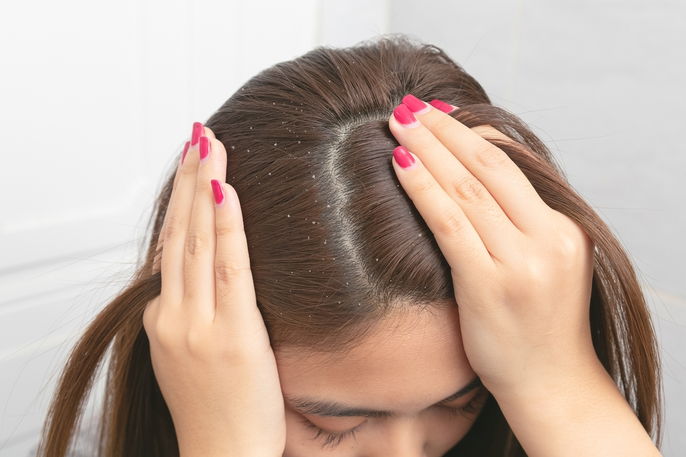
Dandruff is a common inflammatory skin condition that causes the scalp to flake. These small white scales often appear on the hair and can be quite noticeable against dark clothing.
This condition frequently affects the scalp but can also appear on the beard, eyelashes, or eyebrows. You might notice accompanying signs like persistent itching, redness, or an increase in oil production.
Also known as seborrheic dermatitis, dandruff does not have one specific cause but is often linked to external factors. Common triggers include high stress levels, hormonal shifts, or even sudden changes in the weather.
It is important to consult a dermatologist for a professional evaluation of your symptoms. They can help determine the specific type of flaking you are experiencing and recommend the most effective treatment, which usually involves specialized shampoos or topical lotions.
Main symptoms
The primary symptoms of dandruff include:
-
Small white flakes on the scalp, eyelashes, beard, eyelids, or eyebrows
-
Yellowish crusting on the skin
-
Redness in the affected area
-
Itching
-
Increased oiliness of the skin and scalp
-
Occasional hair loss in some cases
These signs and symptoms often become more intense and visible during periods of high stress. During these flare ups, the white flakes are typically easy to spot with the naked eye.
Confirming a diagnosis
A dermatologist diagnoses dandruff by examining the visible signs and symptoms on your skin and scalp. In some instances, the doctor may perform a minor skin scraping to send a sample to a laboratory for testing to rule out other conditions.
This helps determine if the dandruff is linked to a fungal infection or another underlying skin issue. Schedule an appointment with a local dermatologist to confirm a diagnosis and begin an appropriate treatment plan.
Common causes
The exact causes of dandruff are not yet fully understood, but several factors are known to trigger its appearance:
-
Genetic predisposition
-
Hormonal fluctuations
-
High stress levels
-
Use of certain medications
-
Sudden changes in temperature
-
Scalp allergies or sensitivities
-
Alcohol consumption
-
Fungal overgrowth on the scalp
These factors can increase skin inflammation and oil production, creating the ideal environment for dandruff to develop.
Treatment options
Dandruff treatment should be managed by a dermatologist, as the approach depends on how severe and frequent your symptoms are. Common treatment recommendat: Sions include:
-
Anti dandruff shampoos: These often contain antifungal ingredients or agents that help regulate oil production. Common over-the-counter options include ketoconazole found in Nizoral, pyrithione zinc found in Head and Shoulders or Dove Dermacare, and selenium sulfide found in Selsun Blue.
-
Keratolytic and clarifying shampoos: Some products use salicylic acid like Neutrogena T/Sal or coal tar like Neutrogena T/Gel to help remove scale and slow the growth of skin cells.
-
Topical medications: Doctors may prescribe creams, ointments, or lotions to reduce inflammation. This includes corticosteroids like hydrocortisone found in Cortizone 10 or stronger prescription options like clobetasol found in Clobex. Other advanced treatments may include roflumilast foam known as Zoryve or calcineurin inhibitors such as tacrolimus known as Protopic.
Beyond medical treatments, doctors often suggest lifestyle adjustments such as avoiding hats, keeping the skin clean and dry, and skipping very hot showers. Managing stress levels is also a key component in preventing future flare ups.
