


A chalazion, also called a meibomian gland lipogranuloma, is a lump that can develop on the eyelid and cause symptoms like swelling, redness, discomfort, tearing, and/or vision problems.
This lump usually forms when the glands in the eyelid become blocked. It is more common in people with inflammation in the area and in those with conditions such as seborrheic dermatitis, acne, or diabetes.
Treatment for chalazion often involves warm compresses and gentle eyelid massage, but in some cases antibiotics or minor surgery to drain the lump may be needed.
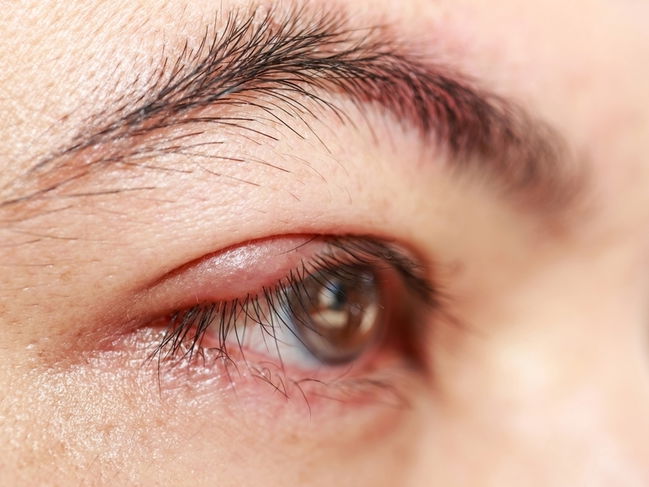
Main symptoms
The main symptoms of a chalazion include:
-
A lump on the eyelid
-
Swelling and/or redness of the affected eyelid
-
Eye discomfort
-
Blurred vision or trouble seeing
-
Tearing
A chalazion most often develops on the upper eyelid, beginning as a small lump. As it grows, other symptoms may appear, such as discomfort, redness, and swelling of the eyelid.
Difference between chalazion and stye
A chalazion usually does not cause pain and happens when the eyelid glands are blocked. A stye, on the other hand, is an infection of these glands caused by bacteria, which leads to pain and discomfort.
Because of this, it is important to see a doctor if symptoms appear to confirm the diagnosis and start the right treatment. In the case of a stye, treatment may involve antibiotics.
How diagnosis is confirmed
A chalazion is usually diagnosed by an ophthalmologist or a primary care doctor based on symptoms and findings during an eye exam.
If the symptoms or exam results are not typical of a chalazion, the doctor may recommend a biopsy of the lesion to confirm the diagnosis.
What causes chalazion
A chalazion develops when the glands in the eyelid become blocked. It is more likely in people with inflammation in the eyelid area and in those with a history of chalazion, stye, seborrheic dermatitis, acne, rosacea, or diabetes.
How treatment is done
In most cases, chalazion treatment involves applying warm compresses to the affected eyelid for 15 minutes, 2 to 4 times per day, along with gentle massage of the area. With this care, the chalazion often goes away in less than a month.
However, if the chalazion does not improve or gets worse, a doctor may recommend a corticosteroid injection to reduce inflammation and relieve symptoms. If an infection is suspected, antibiotics may also be prescribed.
For larger chalazia or those that do not improve with other treatments, minor surgery may be recommended to drain the lesion. This procedure is usually done in the doctor’s office under local anesthesia.