


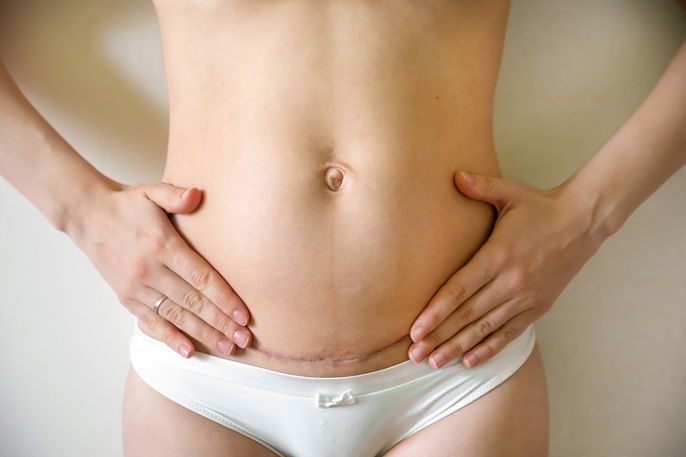
A C-section scar forms when the various layers of tissue opened during delivery, including the skin, muscle, fascia, and uterus, fuse back together. To ensure the best possible cosmetic and physical result, you must follow the specific recovery instructions provided by your obstetrician.
Full healing for a C-section typically takes at least six months to complete. During this window, it is common for the scar to appear red, raised, or firm as the body works through the different stages of tissue repair.
You should consult your doctor immediately if you notice symptoms like persistent pain, spreading redness, or unusual discharge. These signs, along with a foul odor, often indicate an infection or that the wound is beginning to separate.
Types of scars
The most common types of C-section scars include:
1. Keloid c-section scar
A keloid scar is a thick, irregular raised area that can appear reddish, brown, or purple, depending on your natural skin tone. These scars often have a shiny texture and can develop immediately after surgery or even months or years later.
Because keloids grow beyond the original boundaries of the incision, they can cause a burning or stinging sensation.
How to treat: A dermatologist can prescribe treatments such as topical silicone gels (like Kelo-Cote), corticosteroid creams, or 5-fluorouracil injections. In some cases, laser therapy or cryotherapy may be used to reduce the scar's thickness, and if non-invasive methods fail, surgical revision may be considered.
2. Hypertrophic scar
A hypertrophic scar is a raised, pinkish, or red area of skin. Unlike a keloid, this type of scar stays within the original borders of the surgical incision.
These usually appear one to two months after the procedure and tend to respond well to targeted treatments.
How to treat: Dermatologists typically manage these with corticosteroid injections, bleomycin, or 5-fluorouracil. Laser and cryotherapy are also effective options for flattening the tissue.
3. Scar contractures
Contractures are more common with vertical incisions and give the skin a tight, "pulled," or sunken appearance. This happens when the repaired tissues heal together too closely, restricting the independent movement of the different layers.
This can also occur if an infection requires the wound to be re-stitched.
How to treat: A specialized physical therapist can help treat contractures using myofascial release massage, shockwave therapy, radiofrequency, or laser therapy.
Types of incisions
The type of incision used during your surgery will dictate the final look of your C-section scar:
-
Vertical incision: Also known as a "classical incision," this cut runs from the navel to the pubic hairline. It is rarely used today because it carries a higher risk of wound separation, hernias, and contractures.
-
Horizontal incision: This is the standard "bikini cut" made just above the pubic bone. It is preferred because it heals more effectively and is easily hidden by most underwear styles.
Regardless of the cut, proper wound care is the most important factor in preventing complications like infection and ensuring a healthy recovery.
Symptoms of an open c-section incision
Wound dehiscence occurs when the C-section incision begins to separate or open. This is a serious concern and is often accompanied by signs of infection, such as:
-
Pus or unusual discharge from the site.
-
Localized pain or tenderness.
-
Redness and skin that feels hot to the touch.
-
Swelling or inflammation.
-
A foul or unpleasant odor.
These symptoms may suggest the wound is opening internally even if the skin appears intact. If you notice any of these signs, contact your gynecologist immediately for an evaluation.
What a healthy scar looks like
A healthy, well-healed scar should eventually feel flexible and appear similar to your natural skin tone. It should not be significantly raised or deeply sunken.
Because healing is a slow, progressive process, these "final" characteristics are usually not visible until at least six months postpartum. To track your progress, doctors may use the Manchester Scar Scale or the Vancouver Scar Scale, which measure height, flexibility, texture, and color.
How to care for the scar
Once the wound is completely closed and your doctor has cleared you, you can improve the scar's appearance by applying moisturizing creams and performing gentle scar mobilization massages.
Pelvic floor physical therapy is also highly recommended. This can help improve the quality of the scar tissue while assisting in the recovery of your abdominal and pelvic muscles.