


An ant bite is usually not serious. It can cause mild symptoms such as pain, redness, a small raised bump, and itching at the bite site.
These symptoms happen because of the effect of the ant's venom. Although rare, an ant bite can cause a severe allergic reaction.
This risk is higher in people who are sensitive or allergic to ant venom. Medical attention is recommended if symptoms persist, worsen, or do not improve.
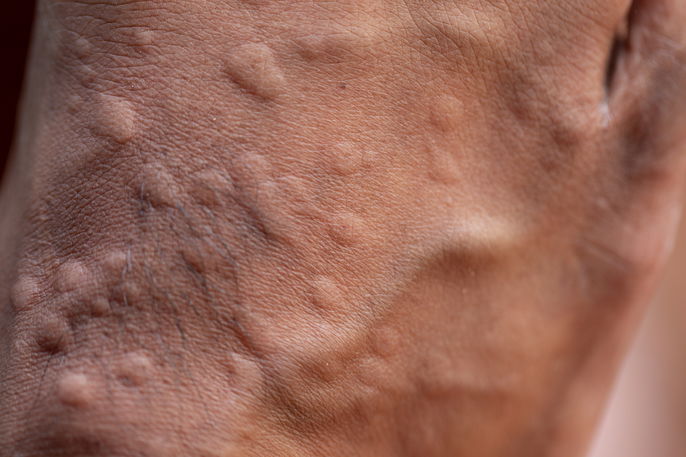
Main symptoms
The main symptoms of an ant bite are:
-
Pain or burning at the bite site
-
Itching in the affected area
-
A small raised bump on the skin
-
A pus-filled blister
-
Redness, especially around the bite
-
Swelling
Symptoms usually start soon after the bite. However, a pus-filled blister may take up to 24 hours to appear and about 1 week to go away. In some cases, redness and swelling may affect areas of skin up to 10 cm wide.
Symptoms of an allergic reaction
Symptoms that may indicate an allergy to an ant bite include:
-
Itching all over the body
-
Severe swelling
-
A large area of redness on the skin
-
Nausea or vomiting
-
Diarrhea
These symptoms usually develop within 30 minutes of the bite and may indicate a severe allergic reaction, such as anaphylaxis.
According to the American Academy of Allergy, Asthma & Immunology (AAAAI), symptoms such as shortness of breath and low blood pressure are among the most dangerous signs of anaphylaxis and require immediate medical attention.
Are black or red ant bites dangerous?
A black ant or fire ant bite can be dangerous in some cases, depending on the ant species, the number of bites, and the person’s sensitivity to the venom.
Although severe reactions are rare, bites or stings from these ants can be life-threatening, especially in people with an allergy.
Ant bite treatment
In the case of an ant bite, you should:
-
Remove the ant from the skin, as it may sometimes stay attached to the body with its jaws
-
Remove any ant parts that may have stayed on the skin by gently wiping the area with gauze or your fingernail
-
Wash the bite site with soap and water to help prevent infection
-
Apply ice to the bite to reduce pain and swelling
-
Avoid scratching, as this can worsen swelling, itching, or the risk of infection
-
Do not pop the blister if one appears, as this can increase the risk of infection
-
Use corticosteroid or antihistamine ointments, as recommended by a healthcare provider, to relieve itching and reduce inflammation in the area
If an ant bite allergy is suspected or has happened before, seek emergency care for evaluation, especially if symptoms appear quickly or affect other parts of the body. According to the CDC, anaphylaxis is a potentially life-threatening allergic reaction that requires immediate treatment.
In the case of anaphylaxis, treatment may involve an epinephrine injection, IV fluids, and medications given directly into a vein, such as corticosteroids and/or antihistamines.
Ointments for ant bites
The most commonly recommended ointments for ant bites are the same ones used for other insect bites. These may contain a corticosteroid or antihistamine, such as hydrocortisone, dexamethasone, or diphenhydramine.
Also recommended: Bug Bite Cream: 8 Options for Itching Irritation & Swelling tuasaude.com/en/bug-bite-creamPrevention tips
Some recommendations to prevent ant bites include:
-
Avoid walking near anthills, especially barefoot
-
Do not disturb ants or their anthills, as this can cause ants to become aggressive
-
Use protective equipment and appropriate clothing, such as gloves, pants, and closed-toe shoes, when gardening or working with soil, especially if there are anthills nearby
-
Be careful when touching dead animals, as there may be ants on the carcasses
In addition, when doing outdoor activities such as picnics, playing, or sports, especially in areas with grass, soil, or brush, it is important to check the area to make sure there are no ant trails or anthills.