


Stretches for upper back pain can help improve range of motion, reduce muscle tension, and ease discomfort in the neck, shoulders, and upper back. These movements may be especially useful for people who spend long periods sitting or standing during the day.
A regular stretching routine can include forward bends, neck stretches, back twists, cat-cow movements, and knee-to-chest stretches. Each stretch should be done slowly, staying within a comfortable range of motion and holding the position for 20 to 30 seconds.
Stretches for upper back pain can be done several times a day, especially during short breaks from prolonged posture. Pain, tingling, or worsening discomfort during stretching should be assessed by a physiotherapist, who can recommend safer positioning or specific treatment.
Upper back & neck stretches
During the stretch, it’s normal to feel the muscle elongating, however you should try to keep within your range of motion to avoid injuries.t. Hold each position for 20-30 seconds, repeating the movement three times, or maintaining each position for a minute.
If you feel any pain or tingling, visit a physiotherapist, who will suggest adjustments to your positioning or assess the need for possible treatment.
1. Forward bend
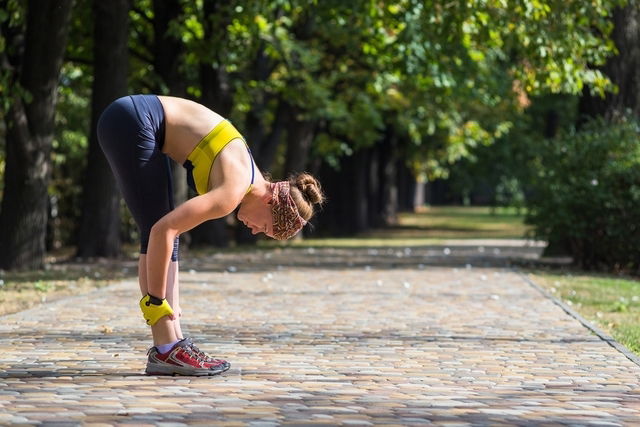
With your legs together, bend your body forward at the hips, as shown above, keeping your knees straight.
2. Sitting down hamstring stretch

Sit on the floor and bend one leg towards you. Then stretch out the other leg in front of you bend your body forward. Try to touch your foot while keeping your leg stretched, as shown in the picture. If you can’t reach your foot, try to reach your shin or ankle. Repeat with the other leg.
3. Floor reach
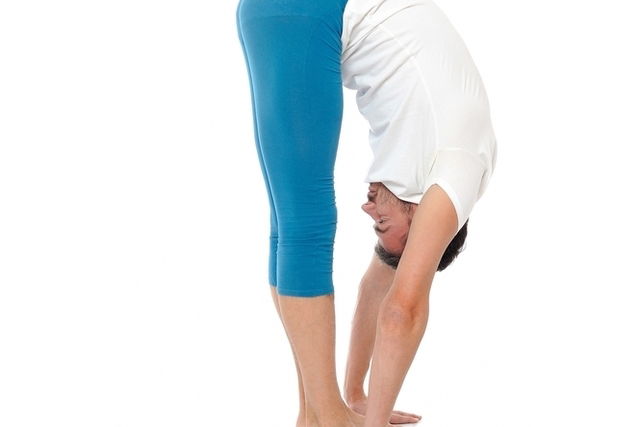
This one is similar to the first exercise, but it is more intense. In this exercise you bend forward and try and place your hands on the floor, without bending your knees.
4. Neck stretch

Tilt your neck to the side, and use your hand to hold your head, thus encouraging the stretch. The other hand can be on your shoulder, or you can just relax it near the hips.
5. Backwards head tilt

Keep your shoulders aligned and look up, tilting your head back. If you like, you can place one of your hands on the nape of your head as this will make it more comfortable.
6. Downwards head tilt

With one hand on top of the other at the back of the head, tilt your head forward, and notice your back stretching.
7. Heel sit
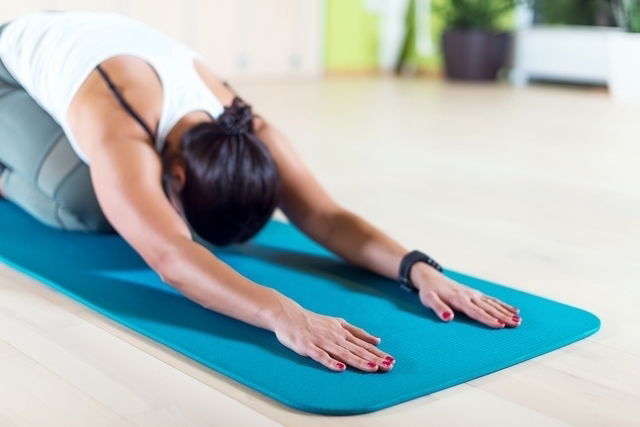
Kneel on the floor, and then place your buttocks on your heels, and bring your core down to the floor, keeping your hands stretched forward, as the picture shows.
8. Hands on your back
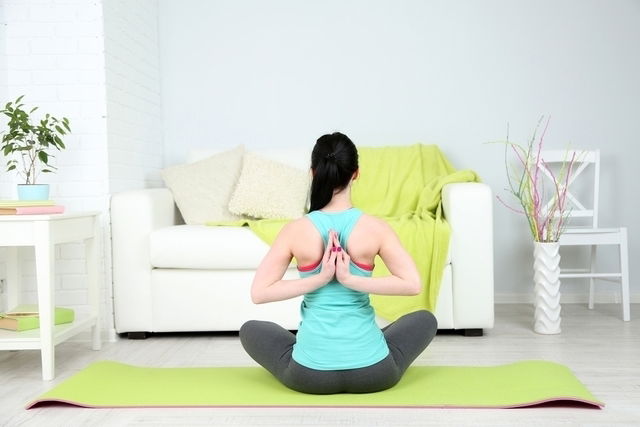
Sitting with your legs bent, in butterfly position and keeping your back straight, try to touch your palms together behind your back, as shown in the picture.
9. Back twist
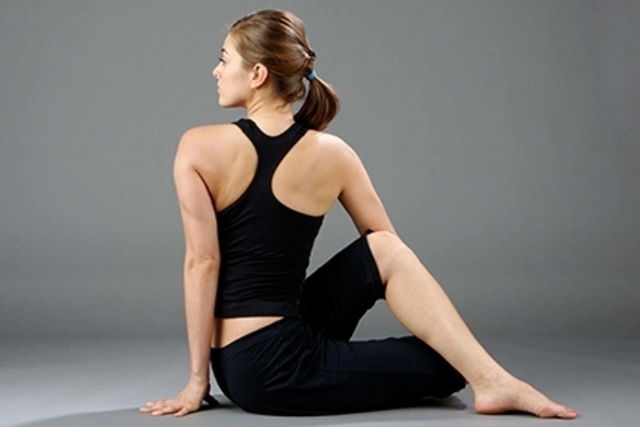
Sit on the floor, with one leg on the floor and one knee bent up. Twist away from the bent knee, placing force on the bent knee with the elbow on the same side to deepen the stretch. Then repeat the same exercise with the other side of your body.
10. Pyramid on the floor
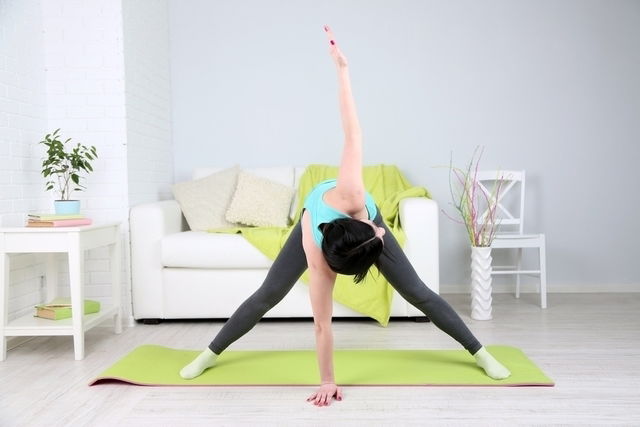
Standing with your legs wide apart, reach your arms forward and then and bend your body forward to touch the ground. Support yourself by placing one hand in the center of the floor, and turn your body to the opposite side, keeping the other hand stretched out behind you. Then repeat on the other side.
11. Knee to chest
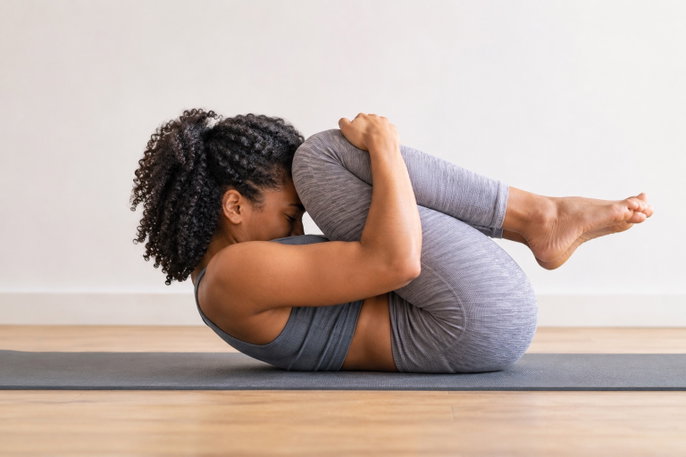
Lie with your back on the floor and your knees bent. Bring your knees close to your chest, and hug them. Keep your shoulders relaxed and your head on the floor. Then bring your head towards your knees to stretch your upper back.
12. Lower back stretch
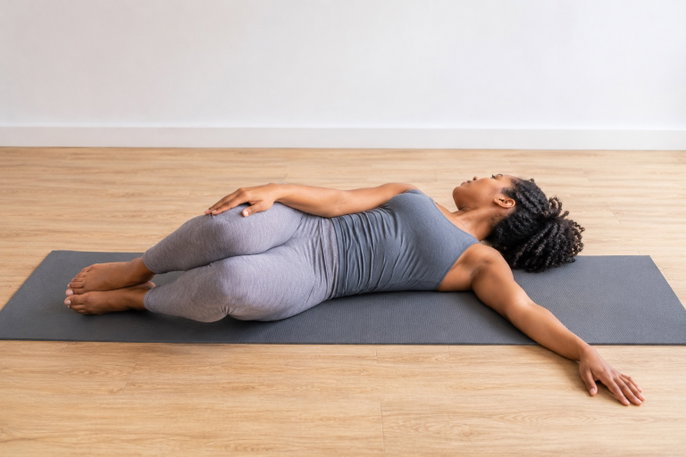
Lie with your back on the floor, with your knees bent, feet flat on the ground, and your arms extended. Let your knees fall to the left side, twisting your lower spine slightly. The intensity can be increased with the help of your left hand. The head should turn in the opposite direction of the legs. Then, repeat the exercise on the right side.
13. Cat position
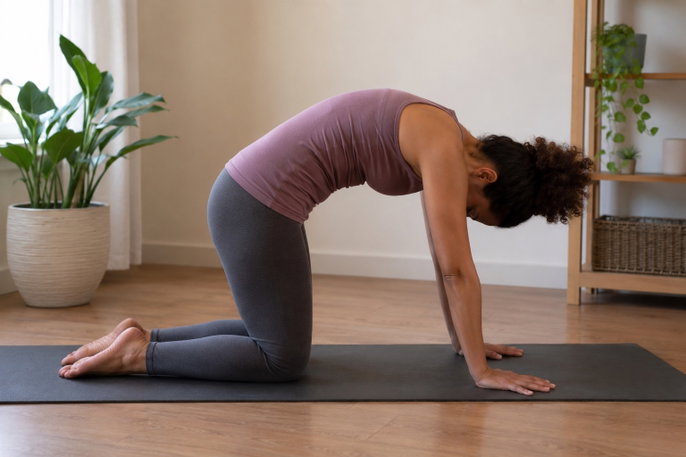
Start on the ground on all fours, placing your hands and knees hip-width apart. Then, slowly arch your back, rounding your back toward the ceiling. Hold for a few seconds and then return to the starting position.
14. Cow position
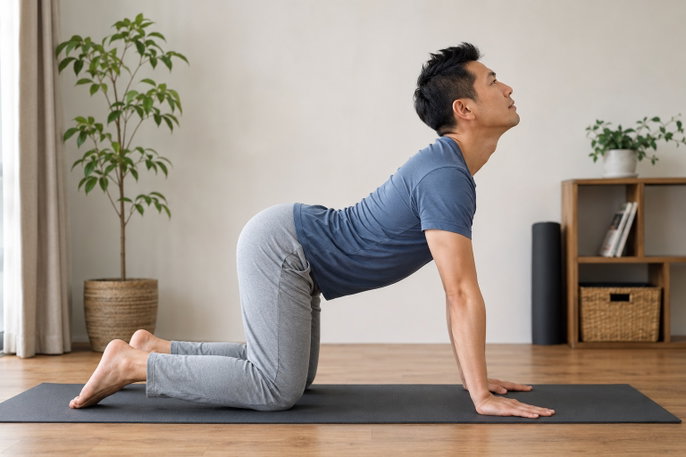
The cow position is the opposite of the cat position. The starting position is also on all fours, with your arms and knees hip-width apart. Tilt your head back as your drop your pelvis the floor to bend your back.
15. Seated forward stretch
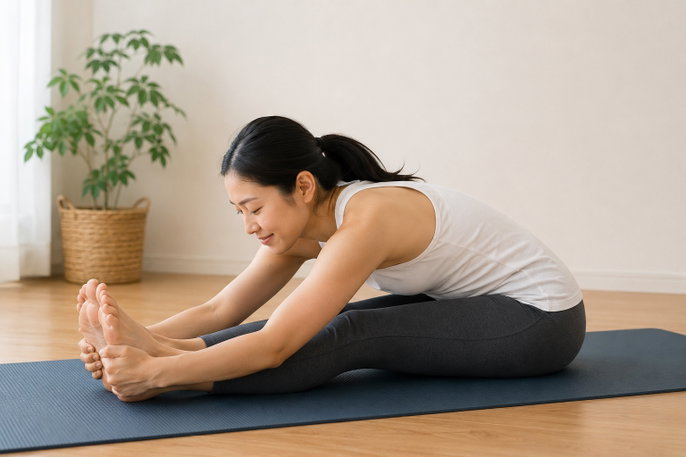
Sit on the floor with your legs flat extended in front of you, and then bend at the hips to touch your heals. Try to lower your belly to your thighs as. you stretch your lower back and legs.
How to stretch correctly
During stretching, it is normal to feel the muscle stretching, but it is important not to force it too much so as not to harm your spine. You must maintain each position for 20-30 seconds and repeat the movement at least 3 times, or maintain each position for 1 minute in a row.
If you feel any pain or tingling sensation, you should consult a physiotherapist to assess the presence of any physical changes and to recommend specific stretching exercises.
