


- Vitamin B12 is mainly found in animal foods, while fortified foods can help vegetarians and vegans meet their needs.
- Vitamin B12 supports red blood cell production, DNA formation, metabolism, and nervous system health.
- Older adults, vegans, and people with certain digestive conditions may have a higher risk of vitamin B12 deficiency.
Vitamin B12 foods include beef liver, fish, shellfish, eggs, dairy products, and fortified foods. These foods can help provide the vitamin B12 needed for healthy red blood cells, DNA production, metabolism, and nervous system function.
Plant-based vitamin B12 foods are usually fortified products, such as breakfast cereals, soy foods, and rice or oat beverages. People who follow a vegan diet may need to rely on these fortified foods or vitamin B12 supplements to meet their daily needs.
The recommended amount of vitamin B12 varies by age and increases slightly during pregnancy and breastfeeding. Older adults, people with certain digestive conditions, and those who eat little or no animal-based food may have a higher risk of vitamin B12 deficiency.
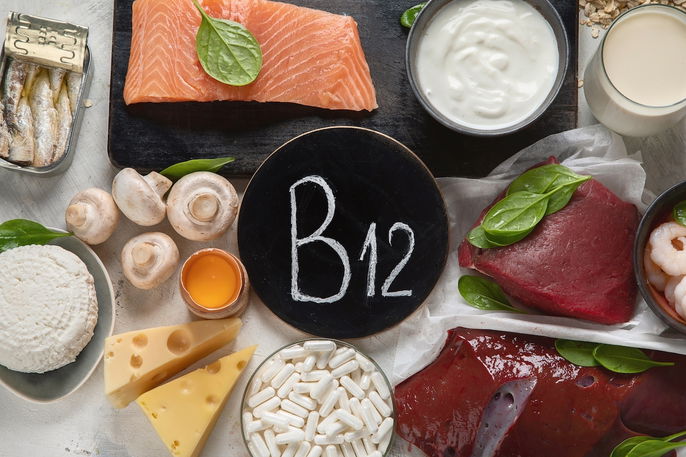
Foods high in vitamin B12
The following table shows the amount of vitamin B12 in 100 g of each food:
Vitamin B12 is absorbed in the intestine and stored mainly in the liver. For this reason, liver is one of the richest food sources of vitamin B12.
Recommended amounts
The recommended daily amount of vitamin B12 varies by age, as shown below:
-
Birth to 6 months: 0.4 mcg
-
7 to 12 months: 0.5 mcg
-
1 to 3 years: 0.9 mcg
-
4 to 8 years: 1.2 mcg
-
9 to 13 years: 1.8 mcg
-
14 years and older: 2.4 mcg
-
Pregnancy: 2.6 mcg
-
Breastfeeding: 2.8 mcg
According to the National Institutes of Health Office of Dietary Supplements, vitamin B12 needs increase slightly during pregnancy and breastfeeding.
Along with other nutrients, such as iron and folate, vitamin B12 is important for healthy red blood cell production and can help prevent certain types of anemia.
Also recommended: 27 Iron-Rich Foods (mg per Serving): Animal & Plant Sources tuasaude.com/en/iron-rich-foodsHow vitamin B12 is absorbed
Vitamin B12 comes in several forms and contains the mineral cobalt. Two forms, methylcobalamin and adenosylcobalamin, can be used directly by the body.
To absorb vitamin B12 from food, the stomach first uses acid to separate it from proteins in the food. The vitamin then attaches to a substance called intrinsic factor, which helps it get absorbed in the last part of the small intestine.
Risk factors for deficiency
Some people have a higher risk of vitamin B12 deficiency, including:
-
Vegans and people who follow strict vegetarian diets, because they may consume little or no food from animal sources
-
Older adults, because age-related changes can reduce the body's ability to absorb vitamin B12
-
People who take omeprazole or pantoprazole to reduce stomach acid
-
People who have undergone Roux-en-Y gastric bypass surgery
-
People with digestive conditions, such as Crohn's disease or celiac disease
In these cases, vitamin B12 supplements may be recommended to help prevent problems such as anemia and impaired nervous system function.
Symptoms of low vitamin B12 can include numbness, tingling or burning in the feet, stiffness and weakness in the legs, depression, and difficulty thinking clearly.
B12 and vegetarian diets
People who follow a vegetarian or vegan diet may have difficulty getting enough vitamin B12, especially if they eat little or no animal-based foods. However, vegetarians who eat eggs and dairy products may be able to get adequate amounts through their diet.
According to the National Institutes of Health Office of Dietary Supplements, people who eat little or no animal-based foods may need to get vitamin B12 from fortified foods or dietary supplements. Fortified options include breakfast cereals, soy products, and plant-based beverages.
A vitamin B12 blood test may not always provide enough information on its own to identify a deficiency. Because the body stores large amounts of vitamin B12, deficiency can take several years to develop.
