


- Sinusitis self-care may include saline rinses, humidified air, warm tea, hydration, and rest.
- These methods can help thin mucus, ease congestion, and reduce facial pressure or irritation.
- See a healthcare provider if symptoms last more than 7 to 10 days, worsen, or occur with fever or breathing problems.
Sinusitis self-care includes simple measures that may help relieve symptoms, such as humidifying the air, rinsing the nose with saline, staying hydrated, and drinking warm tea. These methods can help thin mucus, reduce nasal irritation, and ease congestion and facial pressure.
Sinusitis may be caused by viral infections, such as the flu, or by allergies, and it can lead to symptoms such as headache, facial pain, nasal congestion, and a fever above 100.4°F (38°C). Sinusitis self-care may also include getting enough rest, using warm compresses, and making lifestyle changes to help support recovery.
Most sinus infections improve with self-care and other supportive treatments, although some people may need medication if symptoms last longer than 7 to 10 days or become more severe. Natural remedies can be used alongside treatment recommended by a primary care provider or an ear, nose, and throat specialist.
Natural remedies
Natural remedies that may help relieve sinusitis symptoms include:
1. Humidifying the air
Humidifying the air is an excellent way to help relieve sinusitis. Breathing moist air can keep the airways hydrated and reduce irritation, making mucus easier to clear and relieving sinus discomfort.
This method can be especially helpful at night because it may make it easier to sleep and prevent you from waking up with a stuffy nose.
You can use a humidifier or place a bowl or bucket of warm water in the room. However, avoid excessive humidity because it can promote mold growth and trigger allergies.
2. Rinsing your nose with saline
Rinsing your nose with saline can help remove excess mucus, thin secretions, and relieve nasal congestion and pressure around the eyes or nose. According to the American Academy of Otolaryngology-Head and Neck Surgery Foundation, saline nasal irrigation is recommended for symptom relief in adults with chronic sinusitis.
Use sterile 0.9% saline or a homemade saline solution made with distilled, sterile, or previously boiled and cooled water. Follow the device instructions or your healthcare provider’s guidance.
To perform the rinse, fill a clean syringe or nasal-rinsing device with the saline solution. Lean forward, tilt your head slightly to one side, and gently rinse one nostril so the solution flows out through the other. Keep your mouth open, breathe through your mouth, avoid inhaling the saline, and gently blow your nose afterward.
Also recommended: Nasal Rinse: Benefits, Uses & How to Do It tuasaude.com/en/nasal-irrigation3. Using a nebulizer
Using a nebulizer with sterile 0.9% saline solution may help moisturize the airways and thin mucus. This can make secretions easier to clear and help relieve nasal congestion and sinus discomfort.
Add 5 to 10 mL of sterile 0.9% saline solution to the nebulizer cup. Sit comfortably, place the mask over your nose and mouth, and breathe in the mist slowly and deeply for about 20 minutes or until the saline is gone.
Do not use a nebulizer while lying down because this may increase the risk of inhaling secretions into the airways.
Another option is to take a warm shower with the bathroom door closed to create steam. Breathing the moist air may help hydrate the airways.
4. Inhaling eucalyptus steam
Inhaling eucalyptus steam may help provide temporary relief from nasal congestion caused by sinusitis. Eucalyptus contains cineole, a natural compound with expectorant, mucus-thinning, anti-inflammatory, and antiseptic properties that may help loosen mucus.
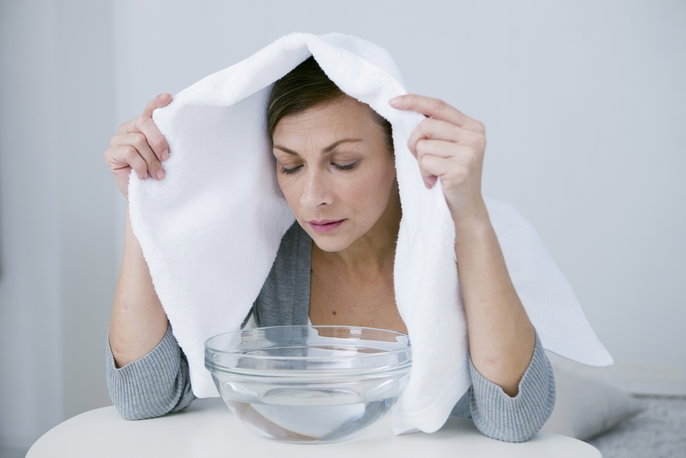
Add 5 drops of eucalyptus essential oil to a bowl of hot water. Cover your head and the bowl with a towel, and breathe in the steam deeply for up to 10 minutes.
This can be repeated 2 to 3 times a day. After inhaling the steam, you can place a cool, damp towel on your face.
If eucalyptus essential oil is not available, eucalyptus leaves can be placed in hot water so that their natural oil is released into the steam.
5. Applying warm compresses
Applying a warm compress to the face may help reduce swelling in the nasal lining and improve airflow. It may also relieve sinus pain or pressure caused by sinusitis.
Soak a towel in warm water and place it over your nose, forehead, cheeks, or around your eyes for about 15 minutes.
6. Drinking more water
Drinking more water helps keep the body and nasal lining hydrated. It can also thin mucus, making it easier to clear and helping relieve facial pressure, pain, and nasal congestion.
Aim to drink about 2 liters, or approximately 68 fluid ounces, of water per day. This may include still, sparkling, or naturally flavored water.
7. Drinking warm tea
Drinking warm tea, such as ginger or thyme tea, may help provide temporary relief from sinusitis symptoms. These teas contain natural compounds with anti-inflammatory properties and can also help keep the body hydrated.
Warm foods, such as soups and broths, may also help loosen nasal congestion and reduce pain and irritation in the nasal lining.
8. Eating garlic and onions
Garlic and onions contain natural antimicrobial compounds that may help the body fight bacteria and reduce sinus inflammation. Including these foods in a balanced diet may support recovery from sinusitis.
Garlic and onions can be added to meals or used to prepare warm infusions.
9. Getting enough rest
During a sinusitis flare-up, getting enough rest can help the body recover from sinus inflammation and fight an infection.
Try to sleep for about 8 to 9 hours each night. Avoid strenuous physical activity and very intense workouts until you feel better.
10. Making lifestyle changes
Lifestyle changes are especially important for chronic sinusitis, which may return several times throughout the year and cause symptoms that last longer.
Recommended changes include quitting smoking, avoiding polluted environments, and keeping your home clean and as free of dust as possible.
When to take medication
If symptoms do not improve within 7 to 10 days, a healthcare provider may recommend a nasal decongestant, antihistamine, corticosteroid, anti-inflammatory medication, or antibiotic.
According to the CDC, most sinus infections improve without antibiotics, which should only be used when a healthcare provider determines they are necessary.
Medication may also be appropriate if you have a fever or if sinusitis is worsening asthma or another respiratory condition.
Read more about sinusitis medication that may be prescribed by a healthcare provider.
