


- Nasal rinse can help clear a blocked or stuffy nose by washing away excess mucus, allergens, and irritants.
- It is commonly used for sinusitis, allergic rhinitis, colds, flu, and COVID-19.
- Nasal rinse should be done with saline and distilled, sterile, or previously boiled water to reduce the risk of infection.
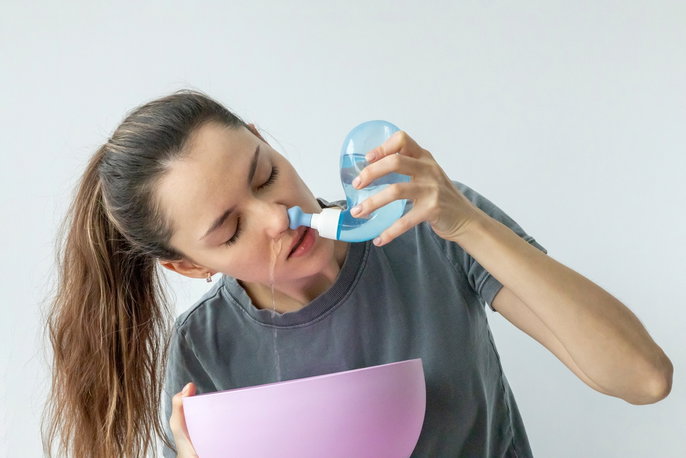
Nasal rinse is a simple technique that uses saline solution to help clear the nasal passages and relieve congestion. It can be done using a nasal rinse device or a syringe without a needle, both commonly available at pharmacies.
During a nasal rinse, saline is introduced into one nostril and flows out through the other, helping remove mucus and irritants. This process can make breathing easier and may reduce discomfort caused by nasal blockage.
Nasal rinse is commonly used for conditions like sinusitis, allergic rhinitis, colds, and flu, as it helps clean the nasal lining and reduce inflammation. It may also help remove allergens, bacteria, and viruses, making it a useful option for maintaining nasal hygiene.
When to use
Nasal rinse is recommended for:
Nasal rinses help clear a blocked or stuffy nose by loosening and washing away excess mucus, making it easier to remove.
It also helps remove inflammatory substances, allergens, bacteria, and viruses from the nasal lining or sinuses.
Step-by-step guide
To rinse your nose with saline, follow these steps:
- Fill a syringe (without a needle) with about 5 to 10 mL of 0.9% saline solution or homemade saline solution.
- During the procedure, keep your mouth open and breathe through your mouth.
- Lean your body forward and tilt your head slightly to the side.
- Place the syringe at the opening of one nostril and press until the saline comes out through the other nostril. If needed, adjust the position of your head until the saline enters one nostril and exits through the other.
It is recommended to repeat the rinse 3 to 4 times, alternating between nostrils as needed.
After finishing the nasal rinse, blow your nose gently to remove as much mucus as possible. If it is difficult to do the rinse while standing, it can also be done while lying down.
Instead of using a syringe, a nasal rinse can also be done with a nasal irrigator, such as a neti pot or squeeze bottle. These devices can be purchased at pharmacies or online.
Can you do a nasal rinse with water?
A nasal rinse can be done with distilled or sterile water. According to the FDA, tap water should only be used if it has been boiled and cooled first, because it may contain organisms that can survive in the nasal passages and cause serious infections.
However, it is best not to use plain water alone. Instead, mix it with baking soda or salt to prepare a homemade saline solution.
To make homemade saline solution, you can add 1 tablespoon of salt to 1 glass of water, or 1 teaspoon of sea salt and a pinch of baking soda to 500 mL (2 cups) of water.
How to do a nasal rinse in a baby
To perform this technique correctly, place a baby older than 2 years on your lap, facing a mirror, and hold their head so they do not turn and hurt themselves.
To begin the rinse, place a syringe with about 3 mL of saline solution into the baby’s nostril and press the syringe quickly, so the stream of saline enters one nostril and naturally exits through the other.
When the child is already used to nasal rinses, there is no need to hold them. Just place the syringe in the nostril and press.
Also recommended: How to Help a Congested Baby: Home Remedies & Causes tuasaude.com/en/congested-babyAdditional tips
Other tips to unplug your nose include:
-
Use a humidifier or vaporizer in each room of the house
-
Drink about 1.5 to 2 liters of water per day, as water helps thin mucus
-
Place a pillow under your mattress to keep your head elevated and make breathing easier
-
Use warm compresses on your face to relieve discomfort and open the sinuses
In addition, you can drink warm teas with decongestant properties, such as ginger and garlic tea or peppermint tea, to help unplug your nose naturally.
Medicines to clear a blocked nose should only be used under medical guidance and with a prescription.
Possible side effects
Nasal rinses are considered safe when done correctly. However, some people may feel temporary discomfort or a burning sensation in the nasal lining.
Although rare, a nasal rinse may also cause a feeling of ear fullness or a nosebleed.
Contraindications for use
Nasal rinse is not recommended for people with an ear infection (otitis), increased pressure in the ears, or a completely blocked nostril.
Nasal rinse is also not recommended for people who have recently had ear surgery or who have sinusitis or facial injuries that have not fully healed.
Babies under 2 years old should not do a nasal rinse, but saline solution or saline drops can be used in the baby’s nostrils.