


- Vaginal itching that persists or keeps coming back should be evaluated by a gynecologist or primary care provider.
- Thick vaginal discharge, pain, swelling, or redness may be signs of a yeast infection or another vaginal infection.
- Some remedies, including apple cider vinegar sitz baths, tea tree oil, green tea, and echinacea tea, should not be used during pregnancy.
Home remedies for vaginal itching, such as herbal sitz baths, green tea, and garlic and ginger tea, may help relieve itching, redness, and swelling naturally. Many of these options have anti-inflammatory and antimicrobial properties that can support the body in fighting infections.
Vaginal itching is often linked to an imbalance of vaginal flora, which can occur with conditions like yeast infections, vulvovaginitis, or bacterial vaginosis. In these cases, home remedies for vaginal itching may help ease symptoms while the underlying cause is being treated.
Some home remedies for vaginal itching include herbal rinses, chamomile or apple cider vinegar sitz baths, and natural options like coconut oil or tea tree oil. These approaches can complement medical treatment, but persistent or severe symptoms should be evaluated by a gynecologist or primary care provider.
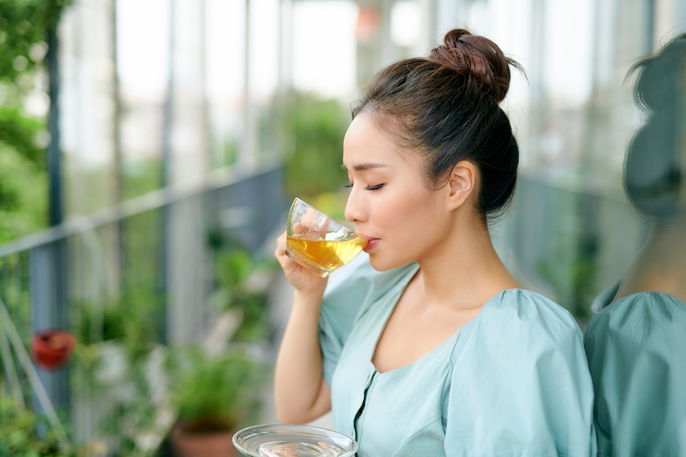
Natural ways to relieve vaginal itching
Some home remedies for vaginal itching include:
1. Herbal rinses
This herbal rinse is made from plants that may help soothe irritation and reduce the growth of fungi or bacteria. It is used externally to relieve vaginal itching and discomfort.
Ingredients:
- 12 oz of water
- 2 teaspoons of dried thyme
- 1 teaspoon of dried rosemary
- 1 teaspoon of dried sage
How to prepare:
Boil the water in a pot, then add the herbs and cover for about 20 minutes. Strain the infusion, allow it to cool, and gently apply it to the external vaginal area (vulva) twice per day to help relieve itching.
2. Chamomile sitz bath
Chamomile tea contains compounds such as flavonoids and alpha-bisabolol, which have antifungal and soothing properties. According to the CDC, vaginal yeast infections can cause vulvar itching, pain, swelling, redness, and thick vaginal discharge. Chamomile may help relieve some of this discomfort.
Ingredients:
- 1 teaspoon of dried chamomile flowers
- 6 oz of boiling water
How to prepare:
Place the chamomile in the boiling water and let it steep for 10 minutes. Then strain the tea and pour it into a sitz basin with warm water. Soak the vulvar area for about 15 minutes. Rinsing afterward is not necessary.
3. Apple cider vinegar sitz bath
Apple cider vinegar may help relieve vaginal itching because it is acidic and has anti-inflammatory properties. When diluted in water, it may help reduce the growth of fungi and bacteria linked to yeast infections and vulvovaginitis, while easing itching, discharge, redness, and swelling.
Ingredients
- ½ cup of apple cider vinegar
- 2 liters of water
How to prepare:
Boil the water, then add the apple cider vinegar. Allow the mixture to cool, then pour it into a sitz basin or bathtub. Soak the vulvar area for 20 minutes, then rinse well.
Apple cider vinegar should always be diluted in water before it comes into contact with the skin, as it can cause irritation when used undiluted.
This sitz bath should not be used during pregnancy.
4. Garlic and ginger tea
Garlic and ginger tea has antibacterial, antioxidant, and anti-inflammatory properties. These come from allicin in garlic and phenolic compounds in ginger, such as gingerol, shogaol, and zingerone, which may help relieve itching, irritation, and redness caused by yeast infections or vulvovaginitis.
This tea may also help strengthen the immune system and support recovery from infections.
Ingredients
- 3 garlic cloves, peeled and cut in half
- 1 cm of ginger root or ½ teaspoon of ground ginger
- 1 liter of water
How to prepare:
Boil the water with the garlic. Remove from heat, add the ginger, and let it steep for 5 to 10 minutes. Strain and drink 3 to 4 cups throughout the day.
Another option is to take garlic oil capsules, which can be found in pharmacies or natural health stores.
Ginger, including ginger tea, should not be consumed by people taking anticoagulants.
5. Green tea
Green tea, made from the plant Camellia sinensis, contains compounds like polyphenol E and EGCG, which have anti-inflammatory and antioxidant properties. These compounds may help support the immune system and relieve vaginal itching.
Green tea may also help stimulate the growth of good gut bacteria, such as Lactobacillus and Bifidobacterium. This can help support a balanced vaginal microbiota and may complement the treatment of yeast infections or vulvovaginitis.
Ingredients:
- 1 teaspoon of green tea leaves or 1 green tea bag
- 1 cup of boiling water
How to prepare:
Add the green tea leaves or tea bag to a cup of boiling water and steep for 10 minutes. Strain, or remove the tea bag, and drink. This tea can be consumed 3 to 4 times per day, or as directed by a healthcare provider.
Green tea should not be consumed by people who are pregnant or breastfeeding, or by people with insomnia, hyperthyroidism, gastritis, or high blood pressure. Because it contains caffeine, green tea should be avoided at the end of the day or in excessive amounts.
Green tea can also be used as a natural extract, but the dose should be determined by a healthcare provider. According to the National Center for Complementary and Integrative Health, green tea extracts have been linked to rare cases of liver injury, especially when taken in tablet or capsule form.
6. Coconut oil
Coconut oil contains lauric acid and caprylic acid, which have antifungal and antimicrobial properties. Because of this, it may help relieve vaginal itching caused by yeast infections.
Ingredients:
- Coconut oil
How to prepare:
Wash your hands well before applying. Then apply a small amount of coconut oil to the external vaginal (vulvar) area once per day for up to 5 days. Do not apply coconut oil inside the vagina.
7. Tea tree oil
Tea tree oil contains compounds with antibacterial, antifungal, and anti-inflammatory properties. When diluted properly, it may help relieve symptoms linked to vaginal infections, such as itching, redness, swelling, and discharge.
Ingredients:
- 5 drops of tea tree oil
- 2 tablespoons of coconut oil, sweet almond oil, or olive oil
How to prepare:
Mix the ingredients well and apply to the vulvar area once per day for up to 5 days. Do not apply this mixture inside the vagina.
Before using tea tree oil, test for an allergic reaction by applying one drop to the back of the hand. If redness, itching, swelling, or blisters appear, wash the area and avoid using tea tree oil.
Tea tree oil should not be used during pregnancy.
8. Bearberry sitz bath
Another home remedy for vaginal itching is a bearberry sitz bath. Bearberry has antimicrobial properties and may help reduce the growth of Candida albicans.
Ingredients:
- 4 teaspoons of dried bearberry leaves
- 1 liter of water
How to prepare:
Add the bearberry leaves to boiling water, cover, and steep for 10 minutes. Once cool, strain the infusion, pour it into a sitz bath basin, and soak the vulvar area for about 20 minutes.
9. Echinacea tea
Echinacea tea is made from the medicinal plant echinacea and contains compounds like alkamides, polysaccharides, glycoproteins, and caffeic acid derivatives.
These substances have immunomodulatory effects, which may help strengthen the immune system and support the body in fighting vaginal infections.
Ingredients:
- 1 teaspoon of echinacea roots or leaves
- 1 cup of boiling water
How to prepare:
Add the echinacea roots or leaves to a cup of boiling water and let it steep for about 15 minutes. Then strain and drink up to twice per day.
Echinacea tea should not be used by people who are pregnant or breastfeeding, or by people with tuberculosis, leukemia, collagen diseases, multiple sclerosis, or autoimmune conditions such as rheumatoid arthritis, lupus, or psoriasis.
