


- Sudden collapse, loss of consciousness, or abnormal gasping may indicate cardiac arrest.
- Chest pain, severe shortness of breath, palpitations, or fainting can be warning signs.
- Call 911 and start CPR immediately if the person is unresponsive and not breathing normally.
Cardiac arrest symptoms may appear suddenly or without warning, although some people experience chest pain, shortness of breath, dizziness, fainting, or heart palpitations beforehand. Cardiac arrest occurs when the heart suddenly stops beating and is a life-threatening medical emergency.
Cardiac arrest symptoms may also include upper abdominal pain, nausea, or a cold sweat, which can sometimes be mistaken for digestive problems. Calling 911 immediately and starting CPR if the person is unresponsive and not breathing normally can improve the chances of survival.
Cardiac arrest symptoms are more common in people with certain heart conditions, although they can occur without an obvious cause. Treatment involves emergency CPR, defibrillation, and advanced medical care, while prompt treatment may reduce the risk of brain injury and other long-term complications.

Signs of cardiac arrest
The main warning signs that may occur before cardiac arrest include:
- Chest pain that feels like pressure, burning, or tightness
- Worsening chest pain or pain that spreads to the back, shoulders, arms, neck, or jaw
- Severe shortness of breath or trouble breathing
- Heart palpitations with chest pain and lightheadedness
- Sudden fainting or loss of consciousness, sometimes preceded by chest pain or shortness of breath
- Trouble speaking clearly or moving the arms or legs
Call 911 immediately if you notice symptoms of cardiac arrest or another serious cardiac emergency.
Why heart problems can feel like stomach pain
Some people with heart problems may experience upper abdominal pain, indigestion, or heartburn.
Reduced blood flow to the heart can cause pain or pressure that spreads to the upper abdomen. This may be mistaken for upper stomach pain.
This can happen because nerves in the central nervous system branch out and connect to several organs, including the heart and stomach.
Digestive problems are usually accompanied by belching, abdominal bloating, and excess gas. Heart-related problems are more likely to cause chest tightness, shortness of breath, or pain that spreads to the arms or jaw.
First aid for cardiac arrest
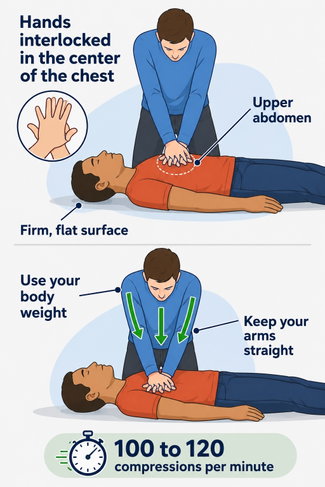
If a person shows warning symptoms for cardiac arrest and then collapses or becomes unresponsive:
- Call an ambulance by dialing 911
- Check whether the person is breathing normally by placing your face near their nose and mouth to listen and feel for breathing while watching the chest for movement:
- If the person is breathing normally: place them in the recovery position, wait for emergency medical help, and continue checking their breathing regularly
- If the person is NOT breathing normally or is only gasping: place them on their back on a firm, flat surface and begin CPR
- To perform chest compressions:
- Place both hands in the center of the chest, with one hand on top of the other and your fingers interlocked.
- Keep your arms straight and press the chest down at least 2 inches, or approximately 5 cm.
- Continue compressions at a rate of 100 to 120 compressions per minute until emergency medical help arrives.
Rescue breaths may be given after every 30 compressions by providing 2 breaths. However, according to the American Heart Association, Hands-Only CPR can be as effective as conventional CPR during the first few minutes of sudden cardiac arrest in adults, so untrained bystanders may perform continuous chest compressions instead.
If rescue breaths are not given, continue chest compressions without stopping until the person starts breathing or moving, an automated external defibrillator (AED) is ready to use, or emergency medical professionals take over.
Risk factors
Although cardiac arrest can happen without an apparent cause, it is more common in people with heart conditions such as:
-
Coronary artery disease
-
Cardiomegaly, or an enlarged heart
-
Untreated life-threatening heart arrhythmias
-
Heart valve problems
The risk of cardiac arrest is also higher in people who smoke, have a sedentary lifestyle, have uncontrolled high blood pressure, or use illicit drugs.
Possible complications
The most serious outcome of cardiac arrest is death. People who survive may recover without major long-term complications, although some experience lasting health problems.
Cardiac arrest can interrupt the flow of oxygen-rich blood to the brain and other organs. According to the American Heart Association, reduced oxygen delivery to the brain may lead to cognitive and neurological changes during recovery, including memory loss, difficulty concentrating, and problems with speech or movement.
The longer blood flow remains severely reduced, the greater the risk of brain injury and organ damage. Immediate CPR, defibrillation, and emergency medical care can improve survival and reduce the risk of lasting complications.
The outcome also depends on factors such as the cause of the cardiac arrest and the person’s overall health.
