


Gentian violet is a topical antiseptic that works against some fungi and bacteria. It has traditionally been used to help treat superficial infections of the skin and mucous membranes, such as oral thrush and athlete’s foot.
It may help relieve itching, redness, and burning when used on affected areas. However, gentian violet should only be used for short periods and with professional guidance, as it can irritate the skin and mucous membranes.
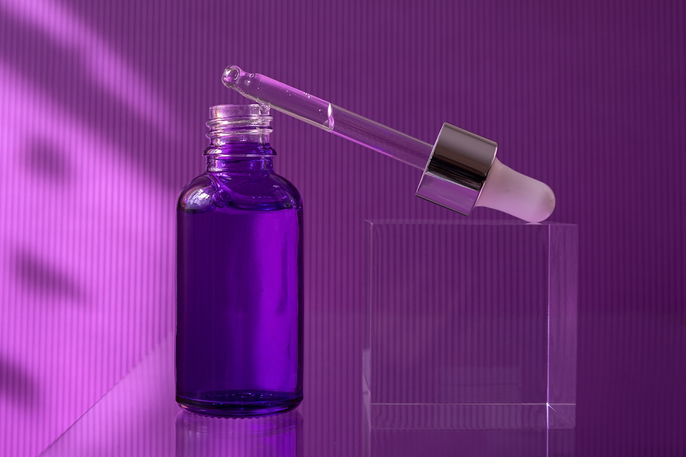
Gentian violet is known for its strong purple color. It can also be diluted in shampoos or hair masks to help reduce yellow tones in blonde, bleached, or highlighted hair.
Health benefits
Gentian violet may be used to help treat inflammation or infections of the skin or mucous membranes, such as:
-
Oral thrush;
-
Genital yeast infection;
-
Athlete’s foot or foot fungus;
-
Stomatitis associated with infection;
-
Superficial fungal skin infections;
-
Dermatitis with mild infection;
-
Superficial wounds with a risk of infection.
Gentian violet can also be used to tone dyed blonde hair or highlighted hair, helping to neutralize yellow tones. However, because it contains alcohol, frequent use can dry out the hair and stain the skin and clothing.
In addition, it may be used in laboratories as a dye to help make microorganisms easier to see. It can also be used to mark the skin before surgery.
How to use
The main ways to use gentian violet are:
1. Gentian violet on hair
To use gentian violet on blonde hair and help reduce yellow tones, add 1 to 2 drops of the solution to a small amount of shampoo or a hydrating hair mask and mix well.
Then, apply it to damp hair, leave it on for a few minutes until the desired tone is reached, and rinse as usual. It is important not to leave it on for too long, as the purple pigment can stain the hair or leave violet tones.
During use, gloves are recommended to prevent stains on the hands. Care should also be taken to avoid getting the product on the skin of the face.
Another option is to buy toning shampoos or purple shampoos, which contain violet pigments similar to gentian violet and are already ready to use.
2. Gentian violet on skin
Gentian violet is usually used on the skin as a topical solution. It is applied directly to the affected area with a cotton swab, cotton pad, or clean gauze.
Before applying it, the skin should be clean and dry so the product can work better. A small amount should be applied only to the lesion, without spreading it to healthy areas, 1 to 2 times per day, as directed by a doctor.
Gentian violet should be used with caution because it stains the skin, clothing, and surfaces. It can also cause irritation if used too often or on large areas.
Covering the affected area with occlusive dressings, such as plastic or waterproof bandages, is not recommended unless directed by a doctor. This can increase how much product is absorbed and raise the risk of skin irritation.
When used in the mouth, care should be taken not to swallow gentian violet solution, as this product is for topical use only.
3. Gentian violet in the mouth
Gentian violet in the mouth is mainly used for fungal infections, such as oral thrush, and should always be used topically.
It is usually applied carefully with a cotton swab or clean gauze soaked in the solution, then passed directly over the lesions on the oral mucosa.
After applying it, avoid eating or drinking for a few minutes so the product can work better.
Gentian violet should be used in small amounts because it can stain the mucosa, teeth, and tongue an intense purple color.
It is also important not to swallow the solution, as gentian violet is not meant for internal use. Treatment should be short-term and done under professional guidance because of the risk of irritation in the mouth.
Precautions when using gentian violet
Gentian violet can irritate the skin and mucous membranes. For this reason, it should only be used for short periods, usually 3 to 4 days, unless a doctor recommends otherwise.
The product should not be applied to open wounds, burns, or ulcerative lesions, especially on the face. This is due to the risk of intense irritation and permanent skin stains.
It is also important to avoid using gentian violet on large areas of the body. Care should be taken not to swallow the solution or let it come into contact with the eyes.
In addition, gentian violet has a history of toxicological concerns, and potential carcinogenic effects have been observed in animal studies. For this reason, prolonged or frequent use is not recommended.
How to remove gentian violet from skin
Gentian violet can temporarily stain the skin because of its intense purple color. However, this discoloration usually fades over time.
To help remove it faster, wash the area with warm water and mild soap, rubbing gently.
Another option is to use vegetable oil, 70% alcohol, or makeup remover, applying it with a cotton pad to help dissolve the pigment. Afterward, the skin should be washed again to remove any residue.
In general, the stain is not permanent on healthy skin and tends to disappear completely within a few days. It is important not to scrub too hard, as this can irritate the skin.
Possible side effects
The most common side effects that can occur while using gentian violet are:
-
Burning;
-
Redness;
-
Itching;
-
Local swelling;
-
Dryness in the area where it was applied.
In some cases, a severe allergic reaction can occur, with blisters or peeling skin, intense itching, and difficulty breathing, swallowing, or speaking. Immediate medical care is needed in these cases.
In addition, when used in the mouth or on large areas, gentian violet can cause more intense irritation. If swallowed accidentally, it can cause gastrointestinal irritation and other adverse effects, which is why its use should always be limited, topical, and controlled.
Who should not use it
Gentian violet should not be used by people with a known allergy to the product or any of its ingredients.
It should also be avoided by pregnant people, breastfeeding people, and young children, unless recommended and supervised by a doctor.
In addition, gentian violet should not be applied to large areas of skin, deep wounds, or burns because of the risk of irritation and excessive absorption.
The product should not be used inside the nose or ears without a prescription.
Gentian violet should also not be used in the eyes. If accidental contact occurs, rinse the eyes immediately with water for at least 15 minutes and seek medical care if irritation continues.
